
- Structured Settlements
- What are Structured Settlements
- Best Structured Settlement Buyers
- How Selling Works
- Eligible Cases
- Eligibility Criteria
- Structured Settlement Regulations
- J&J Settlement
- Maui Wildfire Settlement
- Types of Structured Settlements
- Guaranteed Structured Settlements
- Increasing Structured Settlements
- Deferred Structured Settlements
- Life-Contingent Structured Settlements
- Future Lump Sum Settlements
- Annuities
- What Is An Annuity
- Guide to Selling an Annuity
- Income Annuities
- How Are Annuities Taxed?
- 7 Common Annuity Mistakes & How to Avoid Them
- Annuity Beneficiaries
- Types of Annuities
- Fixed Annuities
- Fixed Index Annuities
- Variable Annuities
- Immediate Annuities
- Deferred Annuities
- Registered Index-Linked Annuity
- Pre-Settlement Funding
- What is Pre-Settlement Funding
- How Pre-Settlement Funding Works
- Eligible Cases for Pre-Settlement Funding
- Pre-Settlement Funding Criteria
- Pre-Settlement Funding Regulations
- Types of Pre-Settlement Funding
- Non-Recourse Cash Advances
- Structured Pre-Settlement Funding
- One-Time Lump Sum Cash Advances
- Compounding Interest Funding
- Flat-Fee Structured Funding
- Structured Settlement Calculator



One specialist stays with you from your first call through funding.
November, 2026
You might see an advance described as non-recourse, a lump sum, and a flat-fee offer. Which type is it?
It could be all three. Each term describes a different part of the agreement: what happens if your case fails, when you receive money, or how the funder calculates its charges.
That’s useful to know when comparing types of pre-settlement funding. You’re looking at the whole offer.
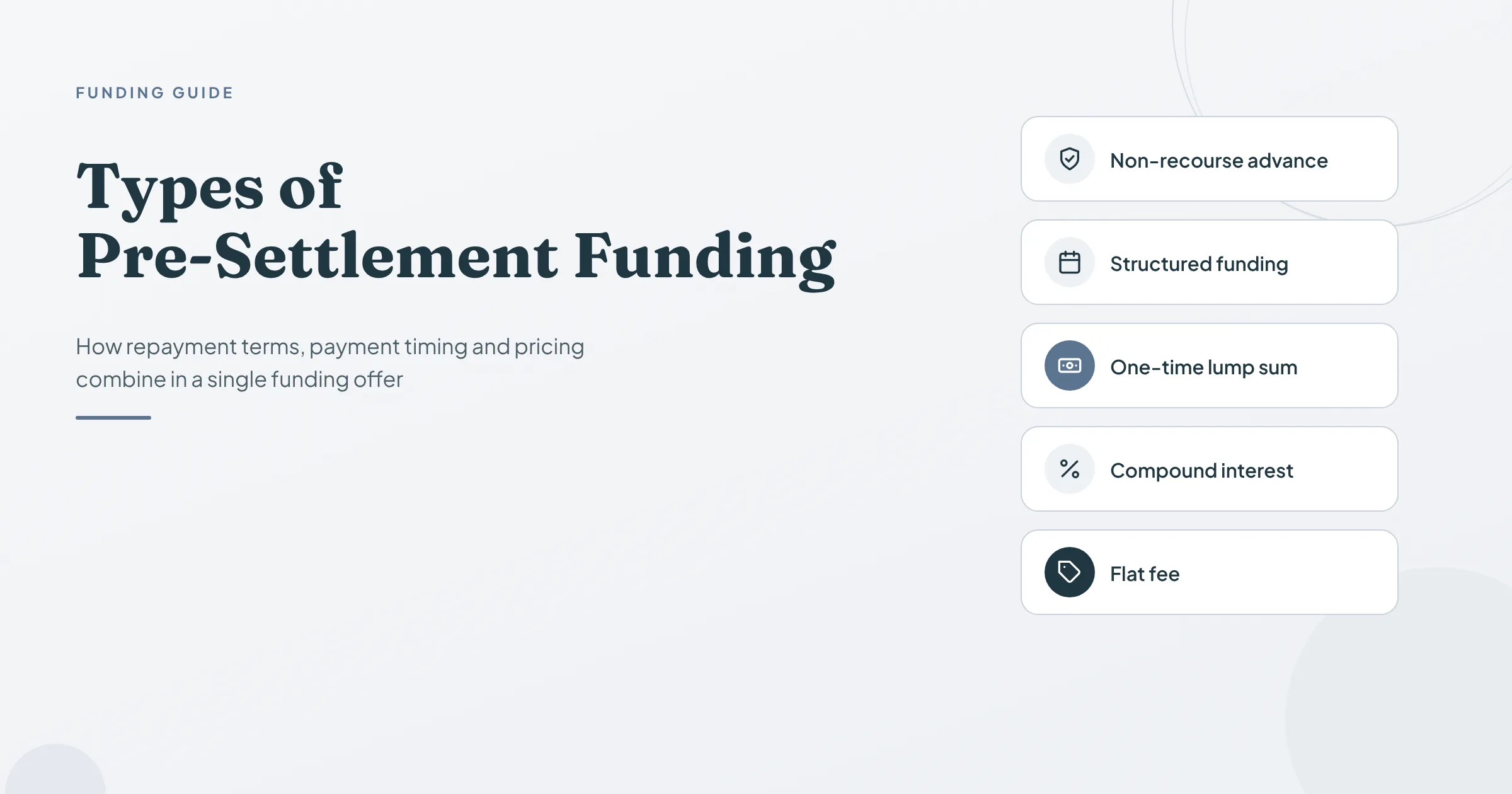
Pre-Settlement Funding Options at a Glance
Pre-settlement funding is an advance against the potential proceeds of a pending legal claim. Some people call it a lawsuit loan or settlement advance. The legal classification depends on the agreement and applicable law.
| Term | What it describes | What to check |
|---|---|---|
| Non-recourse advance | When repayment is required | What happens if there’s no recovery or too little to cover the payoff? |
| Structured funding | Money paid on an agreed schedule | Are future payments committed or subject to further approval? |
| One-time lump sum | An advance paid in one disbursement | How much cash will you receive? |
| Compound interest | Charges calculated on a growing balance | How often do charges compound, and are they capped? |
| Flat fee | A specified charge | Does it stay fixed through repayment, and are other charges added? |
A funder may offer an arrangement that combines several of these features. The terms available depend on your claim, the funder, and applicable law.
1. Non-Recourse Cash Advances
A non-recourse advance ties repayment to the proceeds of your legal claim.
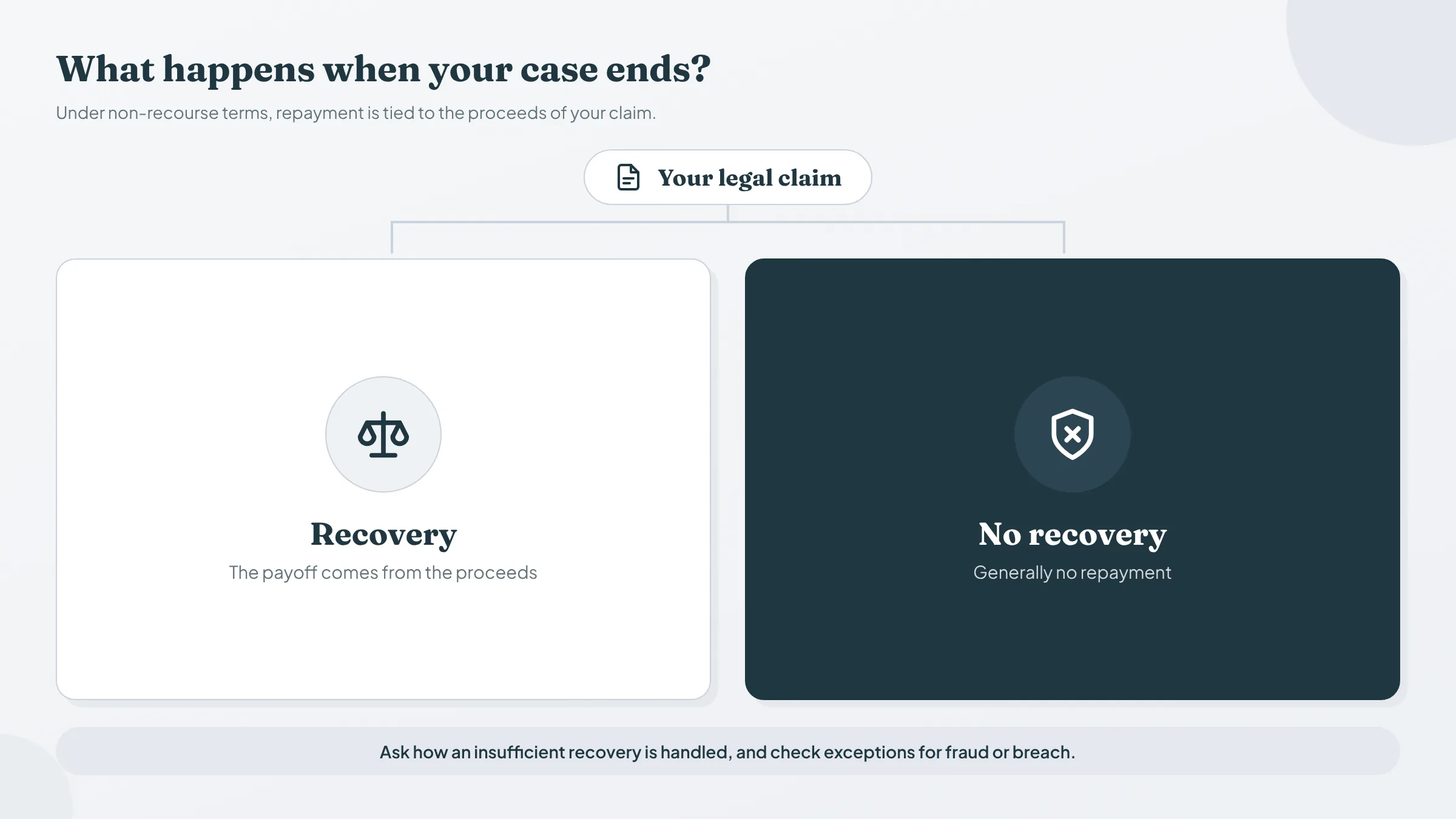
If an ordinary unsuccessful case produces no recovery, you generally don’t repay the advance or its charges under non-recourse terms. A settlement and a court award can both produce a recovery.
What if your case pays less than expected? Ask how the agreement handles an insufficient recovery, and review any exceptions involving fraud, misrepresentation, or material breach.
Non-recourse describes repayment protection. It doesn’t tell you how much the advance costs or whether you’ll receive it in one payment.
2. Structured Pre-Settlement Funding
Structured pre-settlement funding can describe an arrangement that provides advances on a schedule while your claim is pending. You may hear these called scheduled or monthly advances.
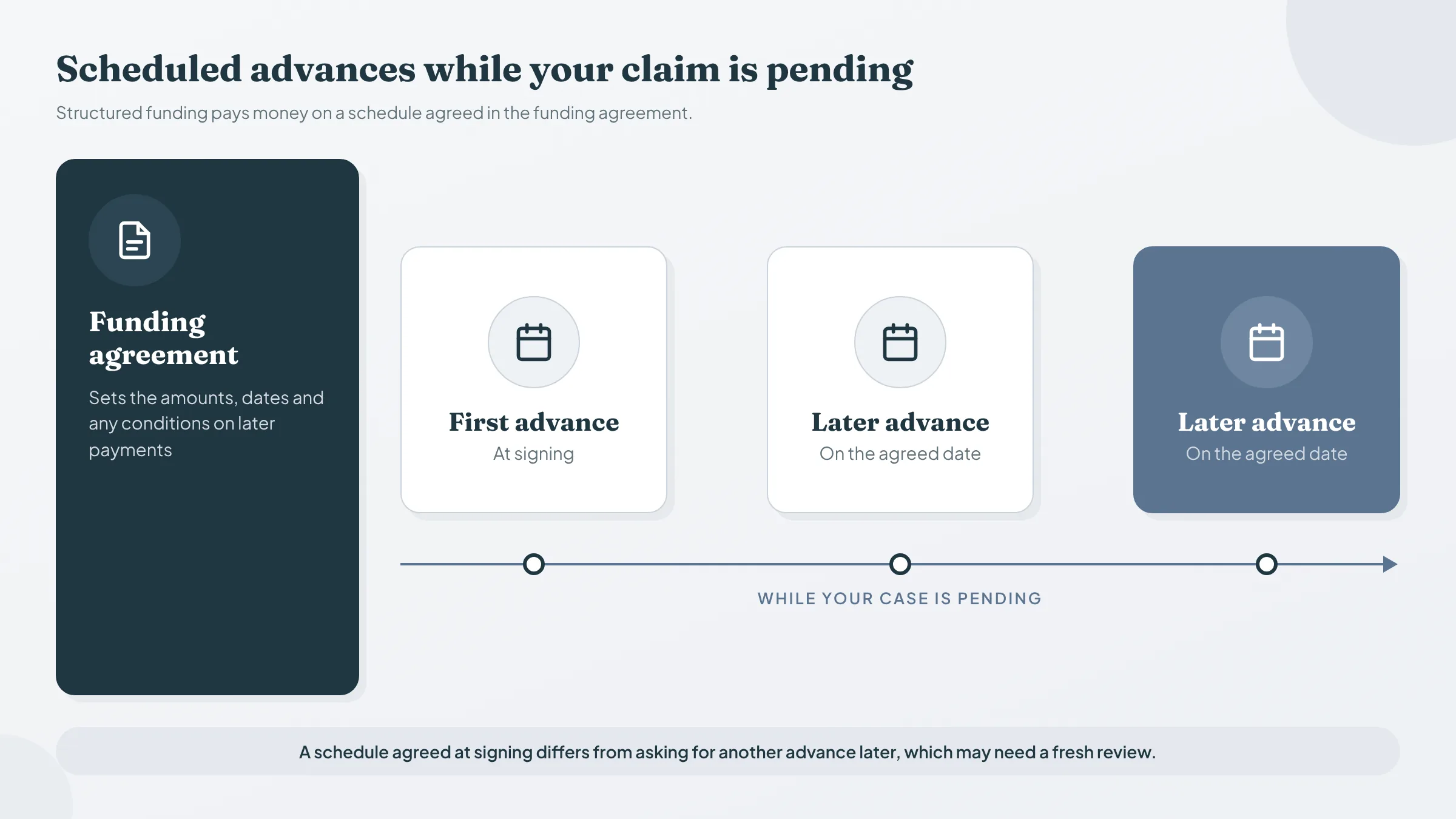
An offer might include monthly payments, or an initial amount followed by later payments. Check the agreement for the amounts, dates, and any conditions that could affect future disbursements.
One detail matters: a schedule agreed at signing differs from asking for another advance later. That later request may need a fresh review.
This arrangement is also separate from selling an existing structured settlement, which involves transferring eligible future payment rights from an established settlement.
3. One-Time Lump-Sum Advances
A lump-sum advance provides the approved disbursement in one payment. You can use it for an immediate expense or manage it across several months.
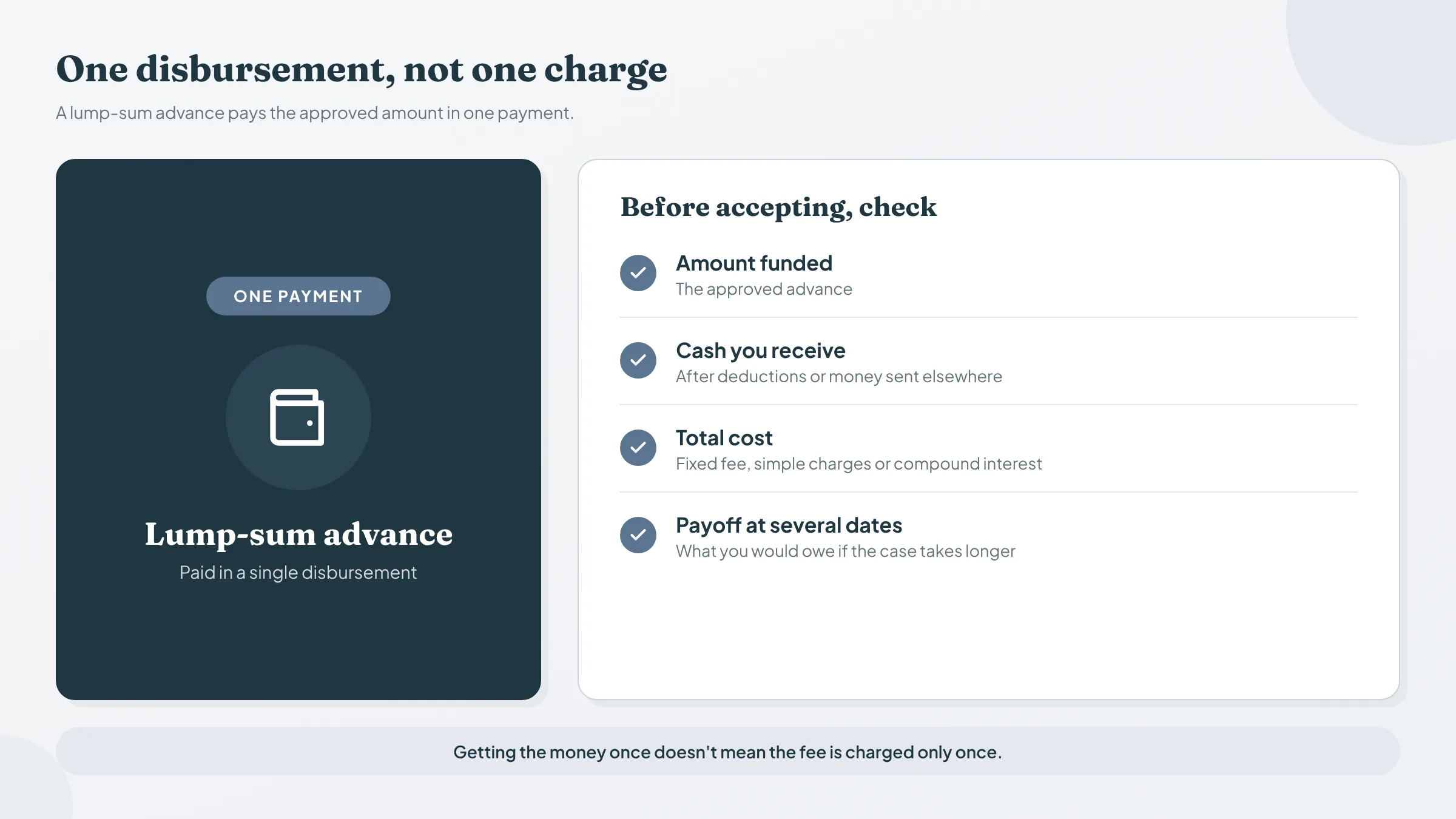
Getting the money once doesn’t mean the fee is charged only once. The offer might use a fixed fee, simple charges, compound interest, or another permitted pricing method.
Before accepting, ask how much will actually reach you. Some of the funded amount may be sent elsewhere on your behalf or used to address existing funding, depending on the arrangement.
4. Compound-Interest Funding
Compound interest is calculated on a balance that includes earlier interest. As that balance grows, later interest charges can grow too.
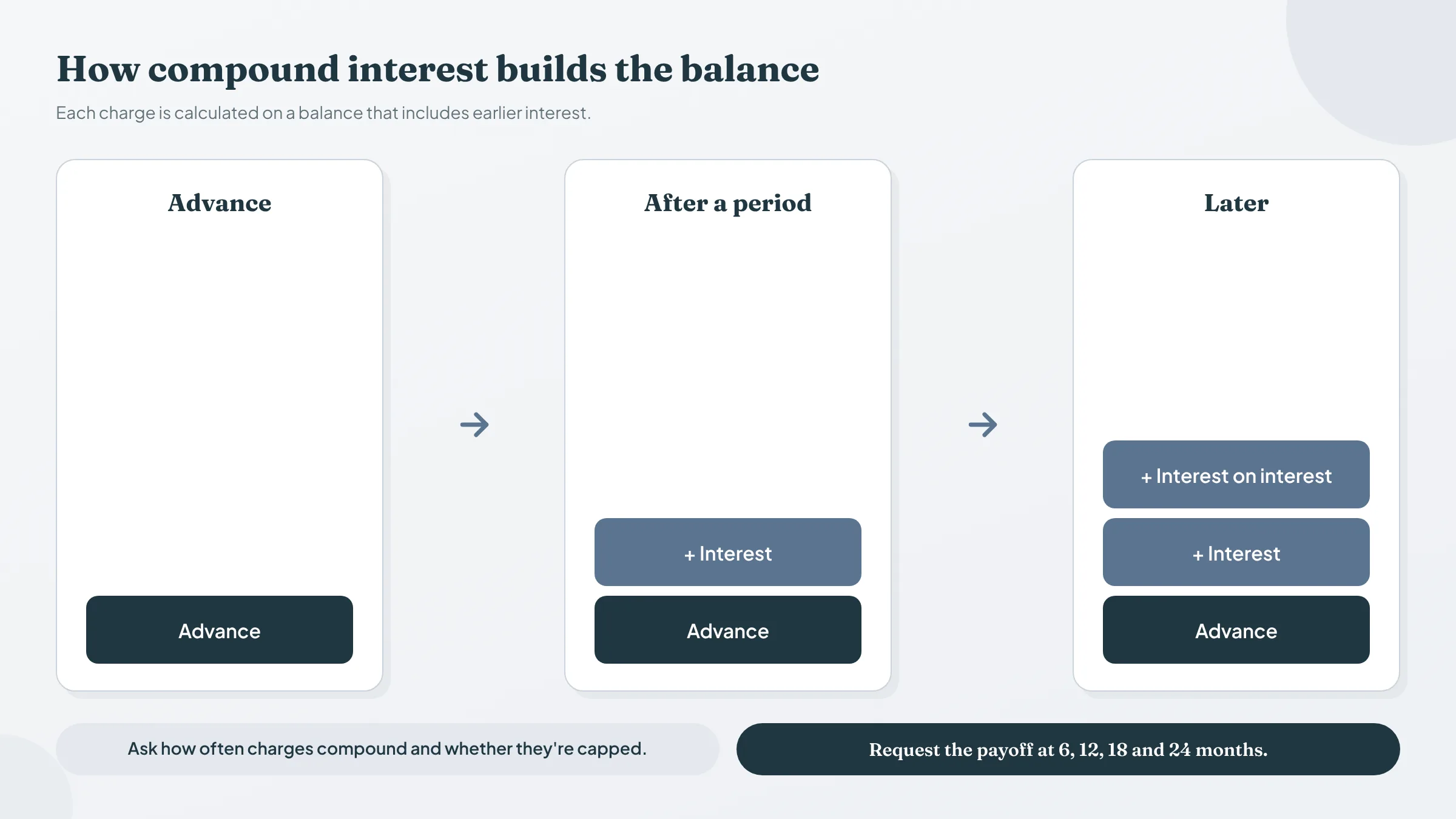
That can make a difference during a lengthy case. An offer with a low-looking monthly rate may produce a much larger payoff after a year or two.
Ask the funder to show you:
- How often charges compound.
- Whether fees are added to the balance used for interest.
- The payoff at six, twelve, eighteen, and twenty-four months.
- Any limit on charges or the total payoff.
Not all time-based charges compound. Simple interest is generally calculated on the original amount rather than on earlier interest. Ask for the calculation method in writing.
5. Flat-Fee Funding
A flat fee can mean an agreed charge that stays fixed through repayment. That can make the cost easier to predict.
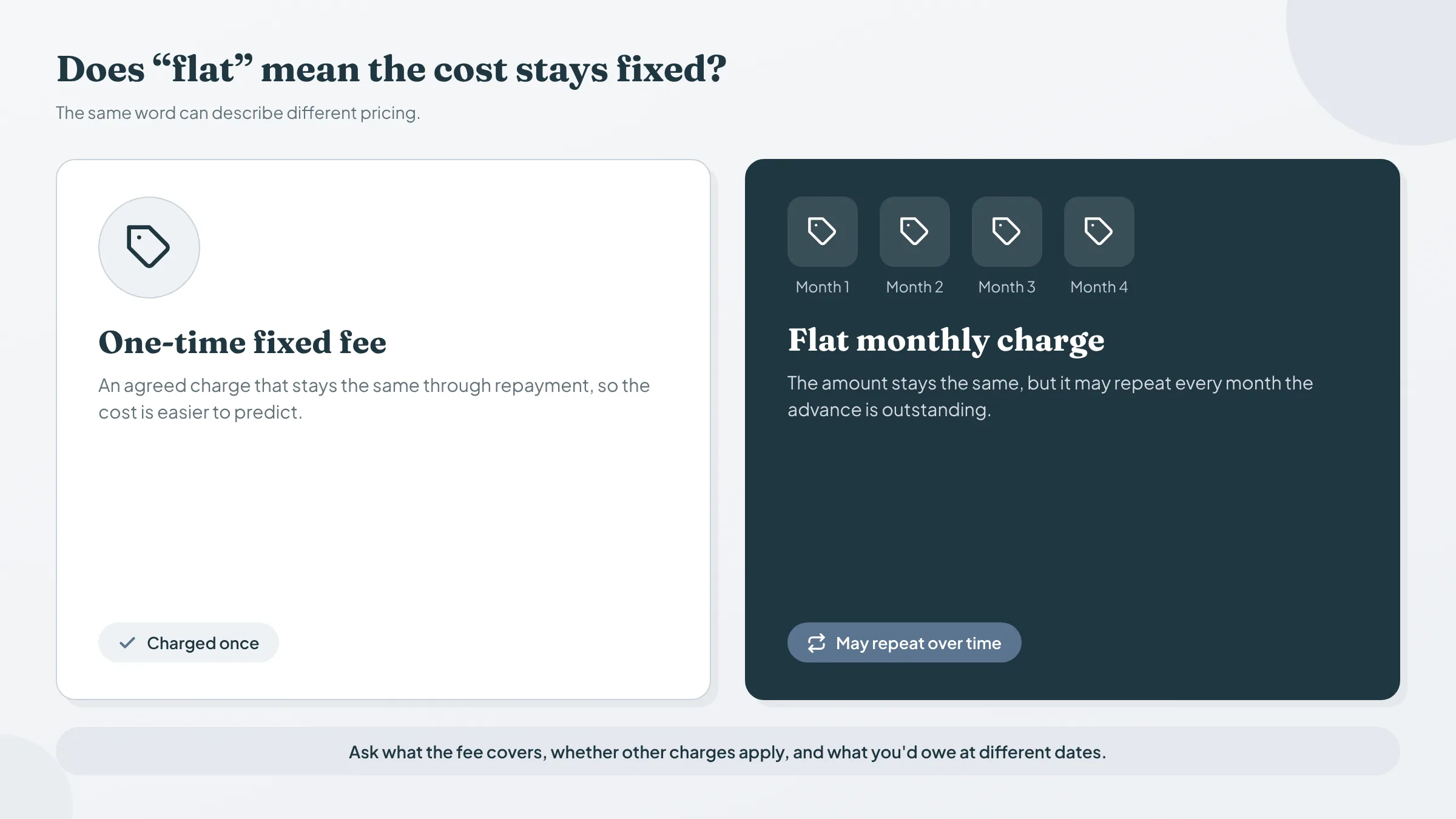
The word “flat” needs a closer look, though. A flat monthly charge may repeat every month. A fee fixed for six months may be followed by another charge later.
Ask what the fee covers, whether any other charges apply, and what you’d owe at different repayment dates. If the fee is quoted as a percentage, find out whether it applies to the advance or another amount.
A fixed fee on your first advance also doesn’t automatically cover additional funding.
How Do These Funding Features Fit Together?
Imagine receiving one advance in a lump sum under a non-recourse agreement. The same offer could include a fixed fee.
Another offer might provide scheduled advances, use non-recourse terms, and calculate charges with compound interest.
Neither description tells you the full cost on its own. Compare the amount you receive, the repayment conditions, and the pricing together.
What Should You Check Before Choosing an Offer?
Put the written offers side by side and ask:
- How much cash will I receive? Check any fees deducted or money paid elsewhere on your behalf.
- When will it arrive? Look for one disbursement or a schedule, including conditions on later payments.
- How is the payoff calculated? Identify fees, rate periods, compounding, minimum charges, and caps.
- What happens if my case takes longer? Request payoff figures at several dates.
- What happens if I don’t recover enough? Review the available-proceeds terms and contract exceptions.
- Can I cancel? Check the deadline and the procedure for returning funds.
State laws can affect the agreement. Ohio Revised Code § 1357.03, for example, requires covered agreements to disclose the funded amount, itemized charges, and specified maximum obligations. Your attorney can help you understand the terms that apply to your case.
Compare Funding Offers Through MySettlement
The right questions are easier to ask when you can see your options.
MySettlement connects you with multiple pre-settlement funding offers. You can compare available payment arrangements, charges, and repayment conditions before choosing.
Tell us how much you’re looking for and disclose any existing funding. Approval and terms depend on your claim, the participating funder, and applicable law.
Frequently Asked Questions
Are all types of lawsuit loans non-recourse?
No. “Lawsuit loan” is used for different arrangements, and the name alone doesn’t establish the repayment terms. MySettlement connects applicants with non-recourse funding offers. Review the agreement for its protections and exceptions.
Does receiving monthly advances mean I owe monthly payments?
Not necessarily. The schedule for receiving money and the schedule for repayment are separate terms. Confirm both before signing.
Is a flat fee always cheaper than compound interest?
No. A fixed fee may cost more if repayment happens quickly and less if time-based charges continue for longer. Compare the total payoff at matching dates, including additional fees and caps.
Is scheduled pre-settlement funding the same as selling a structured settlement?
No. Scheduled pre-settlement advances provide funding while a claim is pending. Selling structured settlement payments involves transferring eligible payment rights under an existing settlement.