



One specialist stays with you from your first call through funding.
November, 2026
Fixed, variable, indexed, immediate, deferred. Annuity names can sound like a menu where you’re expected to know what everything means before you order.
Here’s the useful part: those names answer different questions. Some explain how your money grows. Others tell you when payments begin or which tax rules apply. One annuity can have several of these labels.
An annuity is an insurance contract that can help build savings or provide income. This guide explains the main types, how they overlap, and what to check if you already own one.
Why One Annuity Has Several Names
Take a nonqualified, single-premium, fixed deferred annuity. That sounds like four products squeezed into one sentence. It’s actually one contract described four ways:
- Nonqualified: Purchased outside a tax-qualified retirement arrangement, generally using after-tax money.
- Single premium: Funded through one payment to the insurer.
- Fixed: Interest follows the insurer’s guaranteed rate terms.
- Deferred: Income is scheduled for later, not immediately.
The National Association of Insurance Commissioners distinguishes these features when explaining annuity contracts. So “fixed versus deferred” isn’t a useful either-or comparison. An annuity can be both.
Let’s start with how the value changes, then look at income timing, taxes and payment duration.
How the Main Annuity Types Compare
These are four common ways an annuity’s value can change during its savings phase. They aren’t four boxes covering every possible contract. Fixed indexed annuities belong to the broader fixed family, but a separate row makes their interest formula easier to compare.
Guarantees depend on the insurer’s financial strength and claims-paying ability. Annuities aren’t FDIC-insured bank deposits. The SEC’s annuity overview explains these risks and product distinctions.
| Type | How value changes | What deserves a closer look |
|---|---|---|
| Fixed rate | Interest follows the insurer’s rate guarantees | How long the rate lasts and when withdrawal charges end |
| Fixed indexed | Interest uses an index-linked formula | Caps, participation rates and other limits |
| Registered index linked | Index performance can produce gains or losses | Loss protection, term dates and early-exit adjustments |
| Variable | Selected investments gain or lose value | Investment risk, contract fees and optional benefit costs |
Fixed Annuities
A fixed annuity credits interest under the insurer’s guaranteed terms. You don’t choose stock or bond funds to determine that interest.
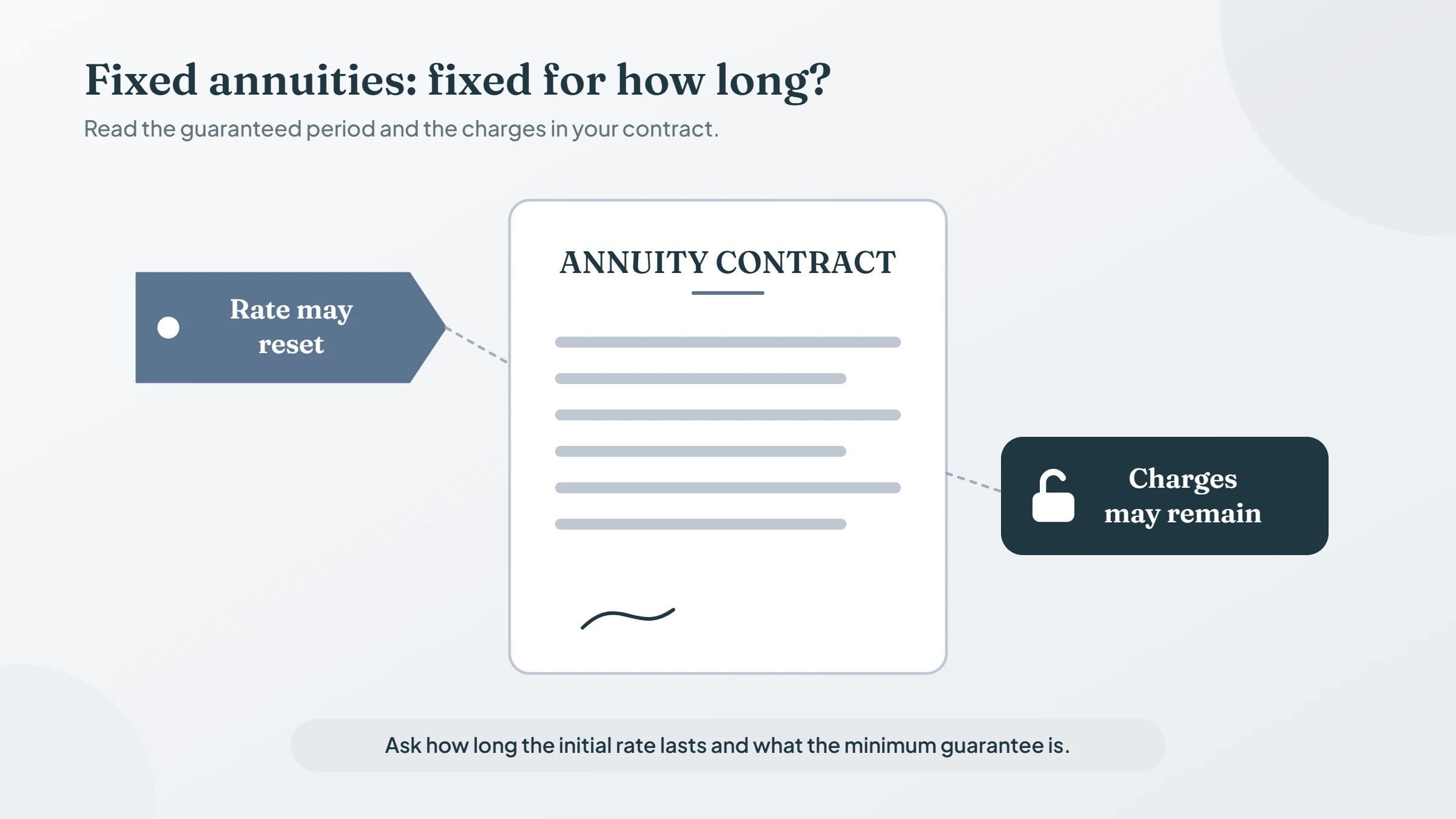
The word “fixed” still needs a follow-up question: fixed for how long? An initial rate may last for a stated period, then reset. The contract’s minimum guaranteed rate may be lower than the rate currently being credited.
A multi-year guaranteed annuity, or MYGA, is a fixed deferred annuity that guarantees its interest rate for a specified term. Amica’s MYGA explanation illustrates this design; individual products have their own terms.
Check the rate period and the surrender-charge period separately. They don’t necessarily end together, as New York Life’s glossary explains. A rate guarantee expiring doesn’t automatically mean all your money becomes available free of contract charges.
Variable Annuities
A variable annuity lets you choose among investment options, often called subaccounts. Their performance affects the contract’s value, and losses can reduce the money you originally invested.
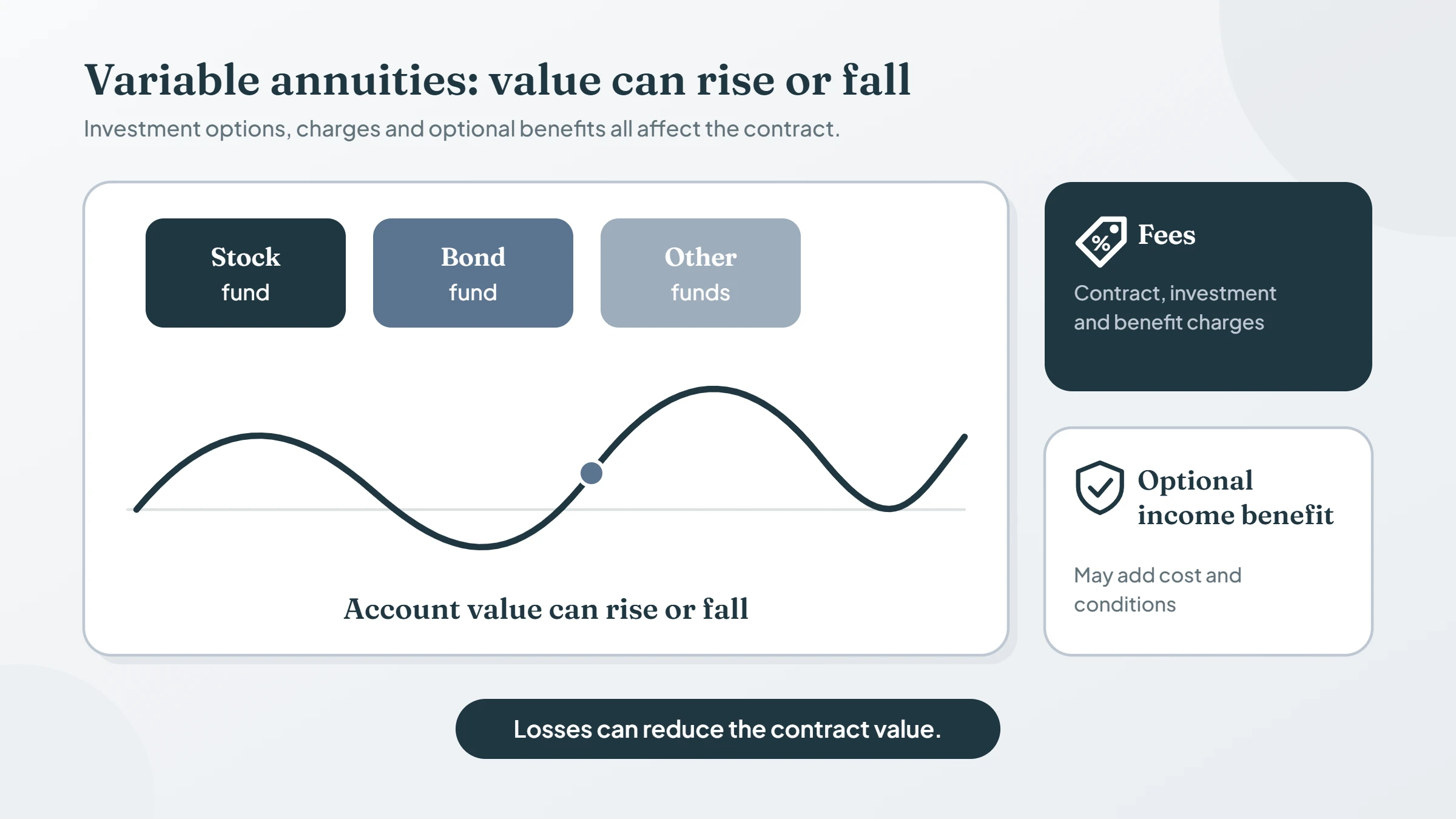
Expenses matter here, too. You may pay charges for the insurance contract, underlying investments and optional benefits. The SEC’s variable annuity guide explains how those costs work.
An optional income guarantee doesn’t turn the entire account into guaranteed cash. It promises a particular benefit under particular conditions.
Also, “variable” doesn’t mean every future income check must change. Depending on the contract and payout choice, income payments may be fixed or variable. The investments and the eventual payment arrangement are separate things to check.
Fixed Indexed Annuities
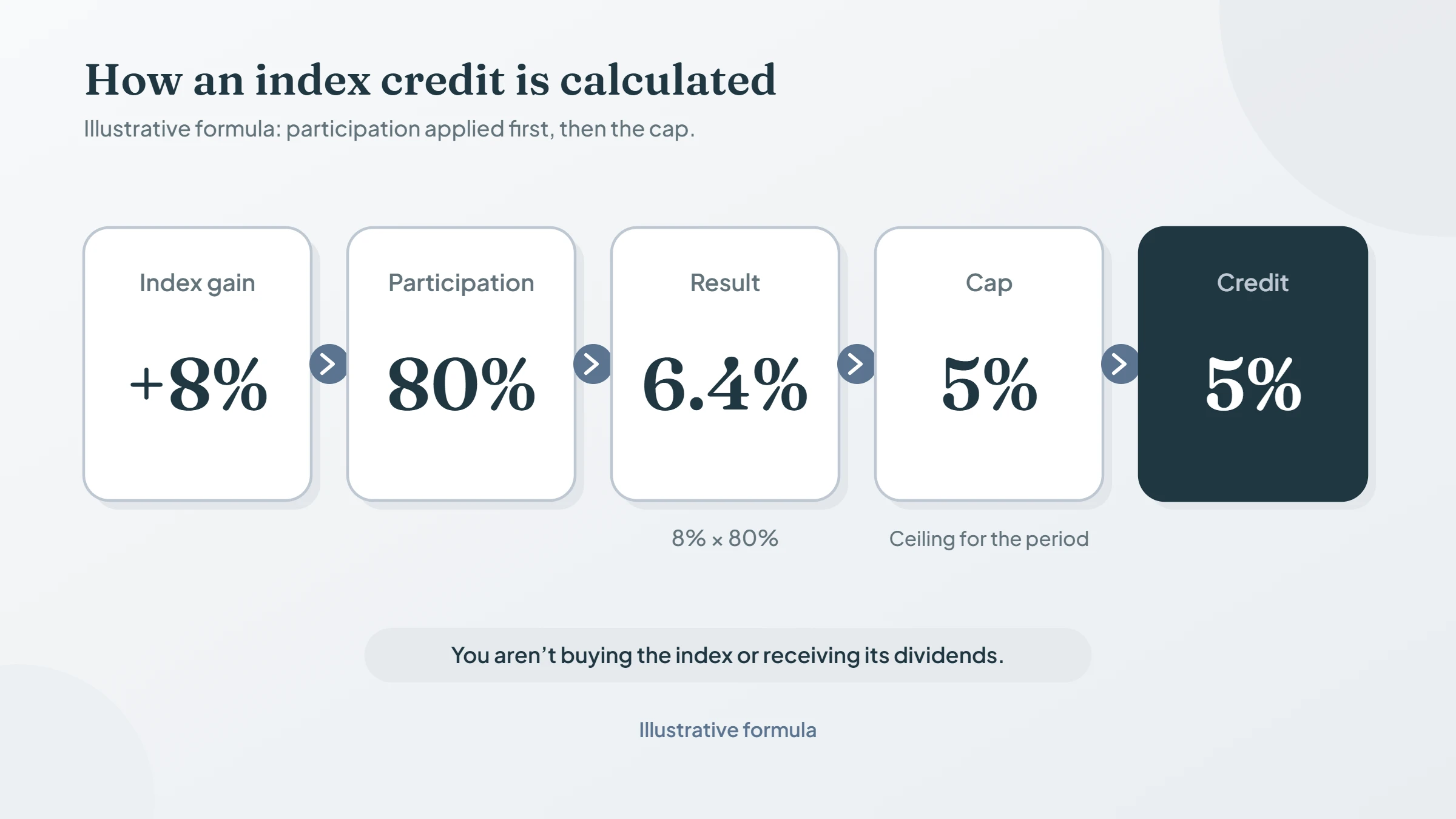
A fixed indexed annuity, or FIA, calculates interest using a formula linked to an index, such as the S&P 500. You aren’t buying the index or receiving its full return automatically.
Three terms often shape the calculation:
- Participation rate: The percentage of the measured index gain used in the formula.
- Cap: A ceiling on the credit for the applicable period.
- Spread: An amount subtracted under the contract’s formula.
Here’s a simplified example: an 8% index gain, an 80% participation rate and a 5% cap produce a 5% credit when participation is applied first, then the cap. That’s 8% × 80% = 6.4%, limited to 5%. This hypothetical excludes other adjustments.
A 0% floor on the index credit means a falling index won’t create a negative credit under that formula. It doesn’t eliminate reductions caused by withdrawals, fees or applicable adjustments. You can also have a year with no interest credited. The SEC’s indexed annuity bulletin explains these limits.
Registered Index Linked Annuities
A registered index-linked annuity, or RILA, also links results to an index. The important difference: a RILA can lose principal.
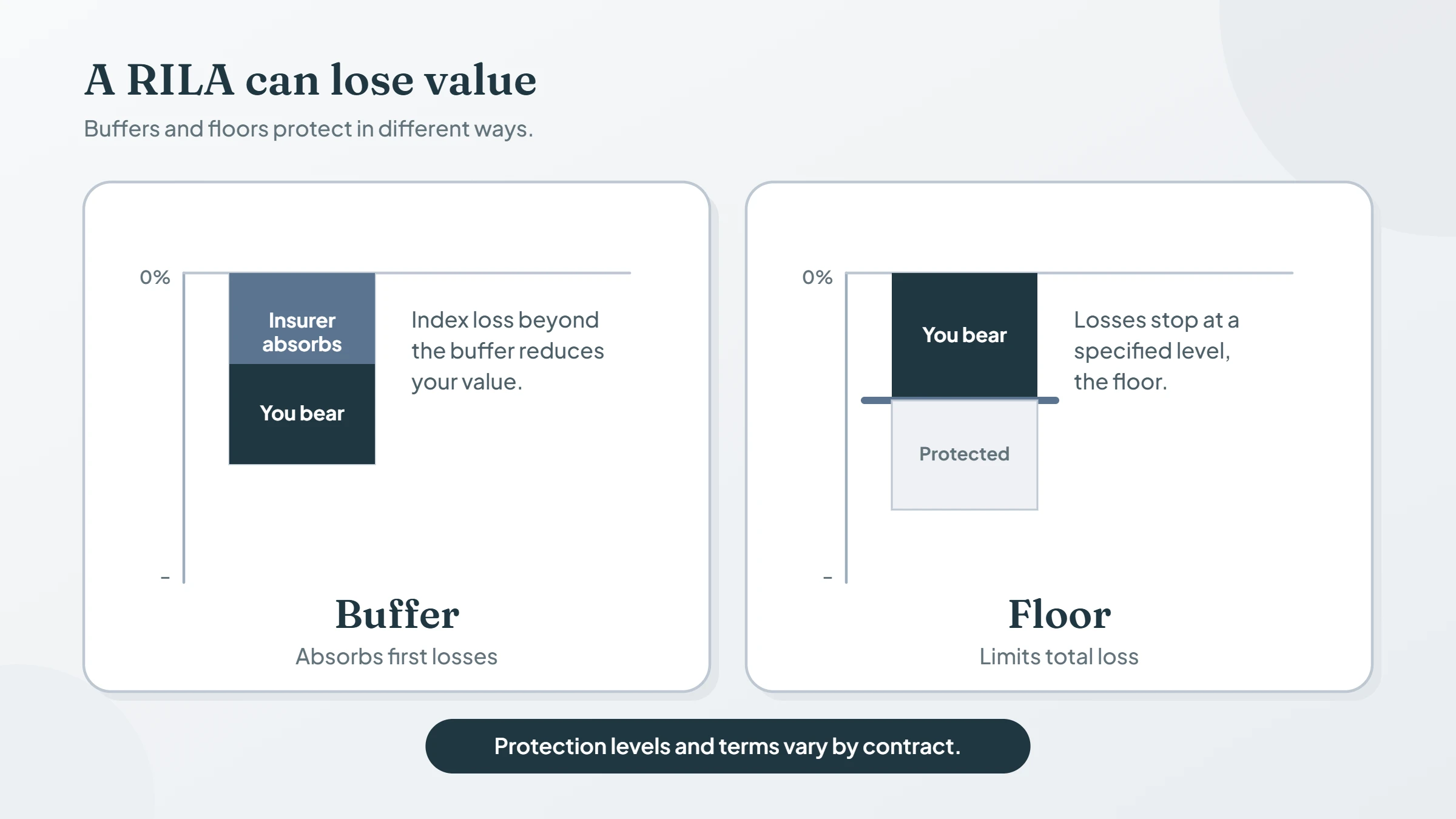
Some strategies offer a buffer, which absorbs an initial portion of an index loss. Others use a floor, which limits the loss to a specified level. Those protections work differently, and the selected strategy may offer limited or no protection.
Check when the protection applies. A term-end calculation may differ from what happens if you withdraw money early. The prospectus explains the strategy, gain limits and adjustments.
RILAs are securities as well as insurance products. The SEC’s RILA glossary also lists names such as “buffered annuity” and “structured annuity.” That last name can cause confusion: a structured annuity in this context is not a structured settlement paid as legal compensation.
Immediate and Deferred Annuities
Now switch questions: When does income begin? That’s what immediate and deferred describe.
Immediate Annuities
An immediate annuity generally starts income within one year of purchase. A single-premium immediate annuity, or SPIA, uses a single upfront payment to buy that income.
“Immediate” doesn’t mean a check arrives the day you sign. The contract sets the first payment date and schedule. The Alabama Department of Insurance explains the immediate-versus-deferred distinction.
Deferred Annuities
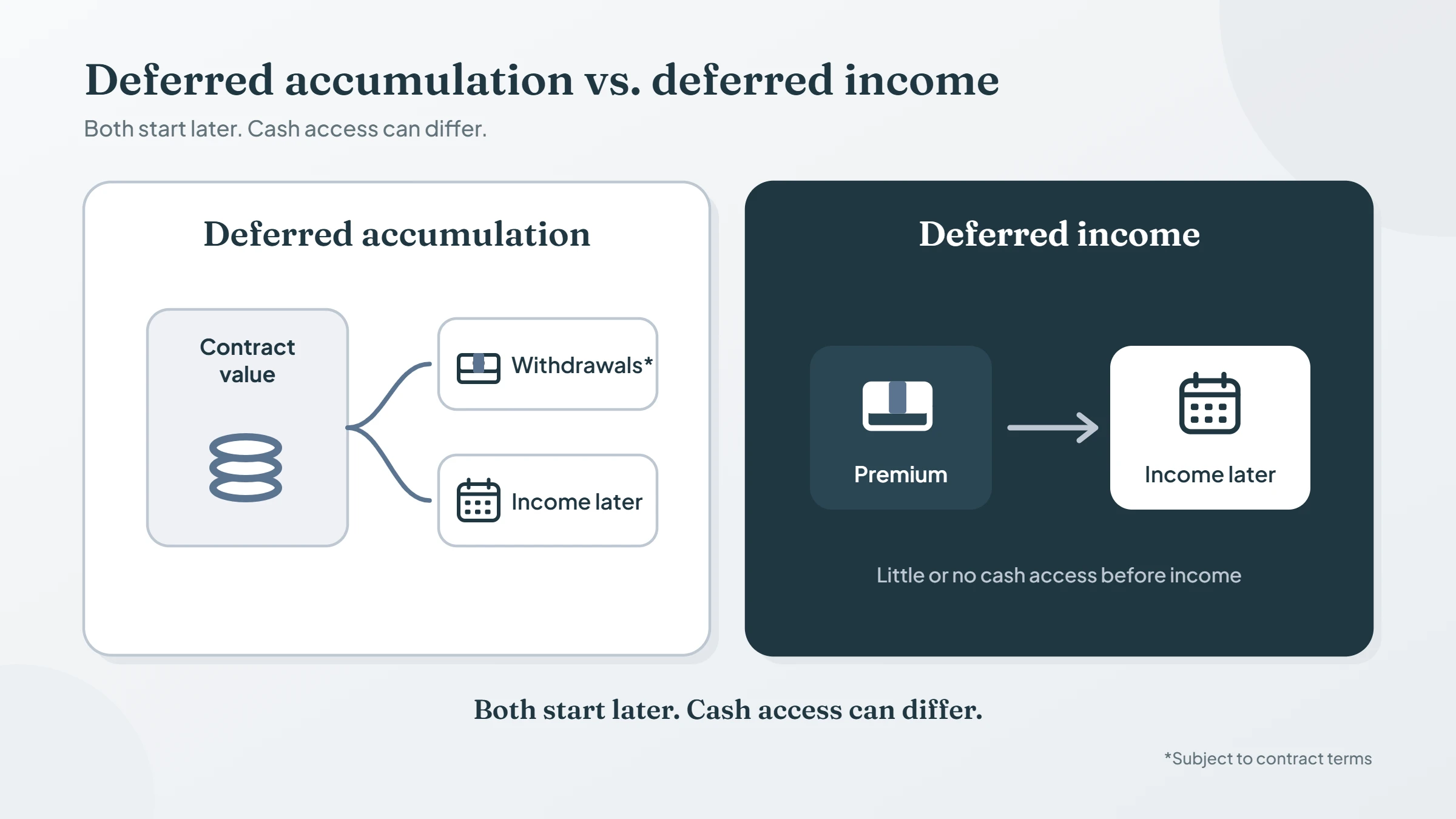
A deferred annuity starts income later. But two arrangements need a closer look:
- Deferred accumulation annuity: Holds a contract value that earns interest or changes with investment results. Withdrawals and later income options depend on its terms.
- Deferred income annuity, or DIA: Buys income scheduled to begin in the future. Access to a cash value may be very limited or unavailable.
New York’s Department of Financial Services distinguishes these designs. A DIA shouldn’t be treated like an ordinary savings account waiting for its first withdrawal.
One more distinction helps: annuitization converts value into an income arrangement and is generally irreversible. Regular withdrawals from an account, including payments under some income riders, are different. A monthly deposit in your bank account doesn’t tell you which arrangement you have.
Qualified and Nonqualified Annuities
These labels describe the retirement tax arrangement, not the investment performance.
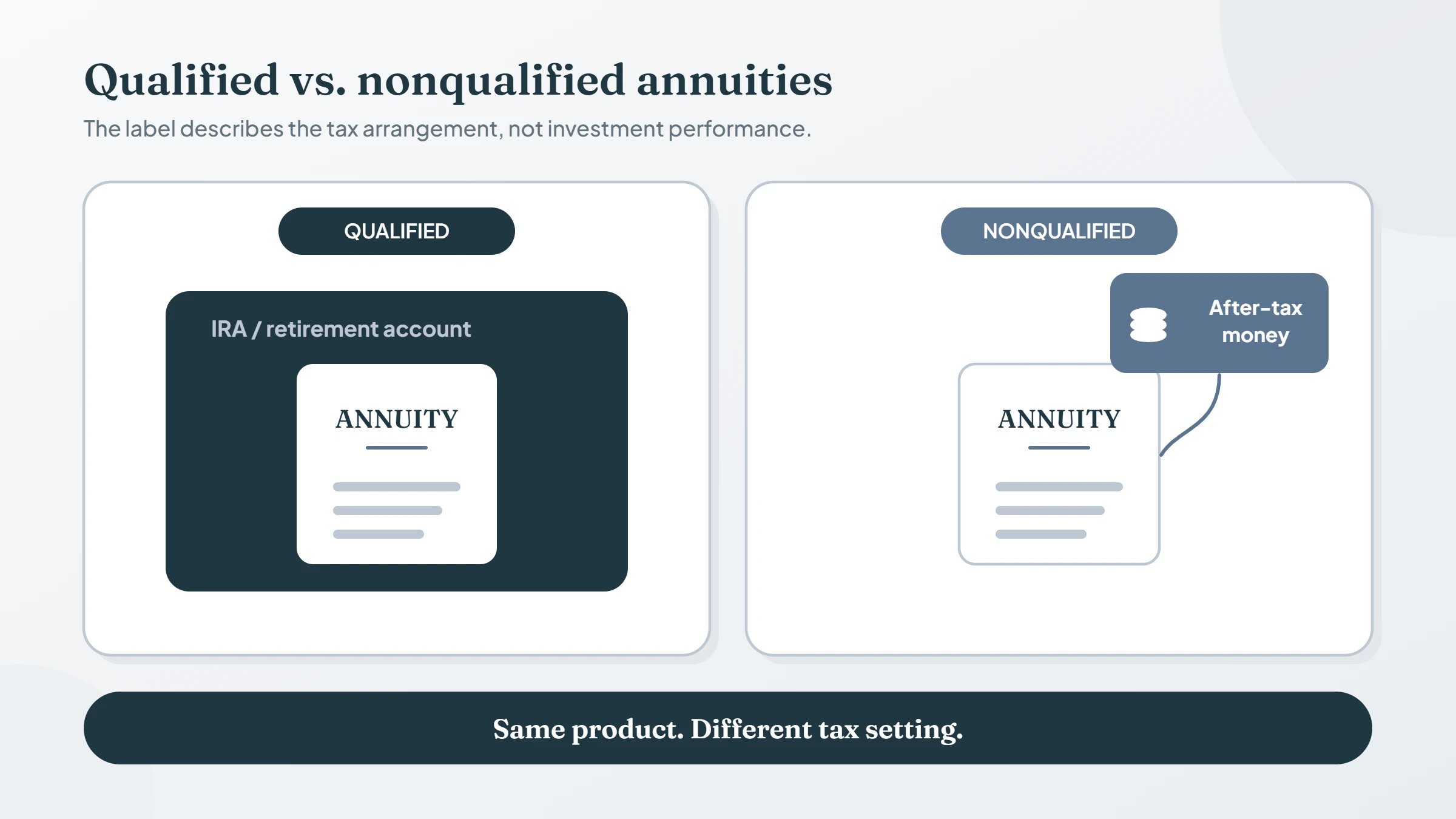
A qualified annuity is held through a qualifying retirement arrangement, such as an IRA. Distributions funded entirely with pretax money are generally taxable. After-tax contributions and qualified Roth distributions can change that treatment; the IRS explains fully and partly taxable payments.
A nonqualified annuity is generally bought with after-tax money outside that arrangement. Earnings usually grow tax-deferred. Pre-annuitization withdrawals generally take taxable earnings first; annuitized payments use different cost-recovery rules. IRS Publication 575 explains the distinction.
An annuity inside an IRA adds no extra layer of tax deferral. Its insurance features need their own justification.
Also, “qualified” here differs from a structured settlement’s qualified assignment. Injury-compensation tax rules belong to a separate discussion.
How Long Do Payments Last?
The payout option answers another question: When do the checks stop? A contract can provide lifetime income, payments for a set period, or a combination.
Death benefits during the savings phase can differ from what happens after income begins. Don’t assume a beneficiary automatically receives all unused premium. FINRA’s annuity guide explains the main payout choices.
| Payout option | How payments work |
|---|---|
| Life only | Payments continue for the covered person’s life and stop at death |
| Period certain | Payments run for a specified period; remaining scheduled payments generally pass to a beneficiary if the recipient dies early |
| Life with period certain | Lifetime payments include a minimum payment period; a beneficiary generally receives payments remaining in that period |
| Joint and survivor | Payments continue while either covered person lives; the amount may change after the first death |
Other Annuity Names You May See
Some names describe specialized designs or added features:
- QLAC: A qualifying longevity annuity contract uses eligible retirement funds for later-life income under specific tax rules. It isn’t an everyday cash-access account. See the Treasury’s QLAC rules.
- Contingent deferred annuity: Can insure lifetime income tied to designated investments held outside the insurer, with payments triggered under contract conditions. NAIC guidance explains this specialist design.
- Income rider: An added contractual benefit, sometimes carrying a separate charge. Its income calculation may use a benefit base that differs from cash value.
- Bonus annuity: Offers a bonus subject to conditions. Check vesting, withdrawal restrictions and other terms before treating the bonus as spendable money.
Check These Details in Your Contract
Your statement may show several numbers. They aren’t interchangeable:
- Account value: Value held under the contract’s current terms.
- Cash surrender value: Amount available upon surrender after applicable charges and adjustments.
- Income benefit base: A figure used to calculate certain benefits, not necessarily money you can withdraw.
A rider’s advertised growth rate may increase its benefit base, not your cash balance. The Insurance Compact’s living-benefit standards distinguish these calculations.
Ask the insurer to identify your rate-guarantee end date, surrender-charge end date, index-term end date and income start date. They may differ.
Check any “free withdrawal” allowance, too. It may waive a surrender charge while taxes or benefit reductions still apply. A market value adjustment, or MVA, can increase or decrease the applicable value and is separate from a surrender charge, as NAIC’s buyer guide explains.
Need a Lump Sum Now?
Start with what your contract permits. A withdrawal or surrender may provide cash; a qualifying annuity exchange changes contracts and doesn’t simply put unrestricted money in your pocket. Some insurers also offer buyouts that involve surrendering or giving up benefits. The SEC explains those optional offers.
Selling eligible future payment rights to a buyer is another possibility. It’s different from asking the insurer to return your premium, and the purchase price isn’t automatically equal to that premium or the total future payments.
Not every annuity can be sold. Individual retirement annuities have a statutory nontransferability requirement. Other arrangements need their own contract and legal review. Structured settlement transfers also have separate approval rules; those aren’t a universal process for retail annuities.
Taxes deserve a check before any transaction. Early distributions may attract an additional 10% federal tax on taxable amounts, subject to exceptions. Assigning rights can also have tax consequences under Internal Revenue Code §72.
MySettlement purchases eligible annuity payment rights; it doesn’t issue new annuities. You can contact MySettlement to discuss a possible purchase. Check the net cash, payments you’d give up and income you’d retain before deciding.
Common Questions About Annuity Types
Can One Annuity Have Several Types?
Yes. A fixed deferred annuity combines fixed interest terms with a later income start. Qualified or nonqualified describes its tax arrangement. These labels answer different questions about the same contract.
Can You Lose Money in Annuities?
Yes. Variable annuities and RILAs can incur market-related losses. Other contracts may lose value through charges, withdrawals or adjustments. Insurer financial strength matters even when a contract includes guarantees.
Does Fixed Mean Lifetime Payments?
No. Fixed interest and payment duration are separate features. Lifetime income depends on the payout option or benefit you select and its conditions.
Which Annuity Type Do I Own?
Check the contract’s specifications, latest statement and any riders. Ask the insurer to confirm the crediting method, tax arrangement, income mechanism and cash access. The product’s marketing name may tell only part of the story.