
- Structured Settlements
- What are Structured Settlements
- Best Structured Settlement Buyers
- How Selling Works
- Eligible Cases
- Eligibility Criteria
- Structured Settlement Regulations
- J&J Settlement
- Maui Wildfire Settlement
- Types of Structured Settlements
- Guaranteed Structured Settlements
- Increasing Structured Settlements
- Deferred Structured Settlements
- Life-Contingent Structured Settlements
- Future Lump Sum Settlements
- Annuities
- What Is An Annuity
- Guide to Selling an Annuity
- Income Annuities
- How Are Annuities Taxed?
- 7 Common Annuity Mistakes & How to Avoid Them
- Annuity Beneficiaries
- Types of Annuities
- Fixed Annuities
- Fixed Index Annuities
- Variable Annuities
- Immediate Annuities
- Deferred Annuities
- Registered Index-Linked Annuity
- Pre-Settlement Funding
- What is Pre-Settlement Funding
- How Pre-Settlement Funding Works
- Eligible Cases for Pre-Settlement Funding
- Pre-Settlement Funding Criteria
- Pre-Settlement Funding Regulations
- Types of Pre-Settlement Funding
- Non-Recourse Cash Advances
- Structured Pre-Settlement Funding
- One-Time Lump Sum Cash Advances
- Compounding Interest Funding
- Flat-Fee Structured Funding
- Structured Settlement Calculator



One specialist stays with you from your first call through funding.
November, 2026
The August 2023 Maui wildfires changed thousands of lives. Families lost loved ones, homes, businesses, and belongings. Many survivors are still working to rebuild.
A $4.037 billion global settlement was reached to resolve claims related to the fires. Now, claimants are beginning to receive information about how their losses have been evaluated and when settlement payments may arrive.
The numbers can be confusing. A claim determination is not necessarily the amount of your first check, and the settlement’s funding schedule does not tell every claimant exactly when they will be paid.
This guide explains the Maui wildfire settlement, how the funds are divided, what the latest payment announcement means, and how you may be able to sell eligible settlement payment rights.
Maui Wildfire Settlement: Quick Overview
| Question | What We Know |
|---|---|
| How much is the settlement? | The global settlement totals $4.037 billion. |
| How is it divided? | The agreements allocate $135 million to the Class Settlement Fund. The remaining $3.902 billion is allocated to the Individual Settlement Fund. |
| Has the settlement become effective? | Hawaiian Electric reports that the agreements became effective on April 10, 2026, after the last funding condition was satisfied. |
| When will individual payments begin? | The Individual Settlement Program says rolling payments are scheduled to begin November 4, 2026, for claimants who have met the requirements for payment. |
| What is the initial payment percentage? | The program announced an initial 10% pro rata payment percentage for finalized claim determinations. |
| Will everyone receive a check on November 4? | No. Payment timing depends on the status of each claim and the information required before disbursement. |
| Can I sell my Maui settlement payments? | A sale may be possible if your payment rights qualify. Your agreement, claim status, applicable law, and any restrictions need to be reviewed. |
The Maui Wildfire Cases Portal provides information about the Individual Settlement Program. Hawaiian Electric’s SEC filing discusses the global settlement and its funding schedule.
Waiting for Your Maui Settlement Payment?
Your settlement documents can help determine what payment options are available. MySettlement purchases eligible Maui wildfire settlement payment rights and can discuss your situation with you.
What Is the Maui Wildfire Settlement?
The Maui wildfire settlement is a global agreement intended to resolve claims related to the August 2023 fires in Lahaina, Kula, and Olinda.
The lawsuits involved claims for losses such as:
- Death and physical injury.
- Damage to homes, vehicles, and personal belongings.
- Business losses and lost income.
- Additional living expenses and displacement.
- Emotional distress and other eligible losses.
The settlement brings together two agreements: one for individual claims and another for class claims. Each has its own fund and administration process.
The defendants include Hawaiian Electric, the State of Hawaiʻi, Maui County, Kamehameha Schools, West Maui Land entities, Hawaiian Telcom, and Spectrum/Charter Communications. The settlement was reached without an admission of liability.
What Caused the Maui Wildfires?
On August 8, 2023, wind-driven fires spread through parts of Maui. The Lahaina fire caused widespread destruction and claimed more than 100 lives.
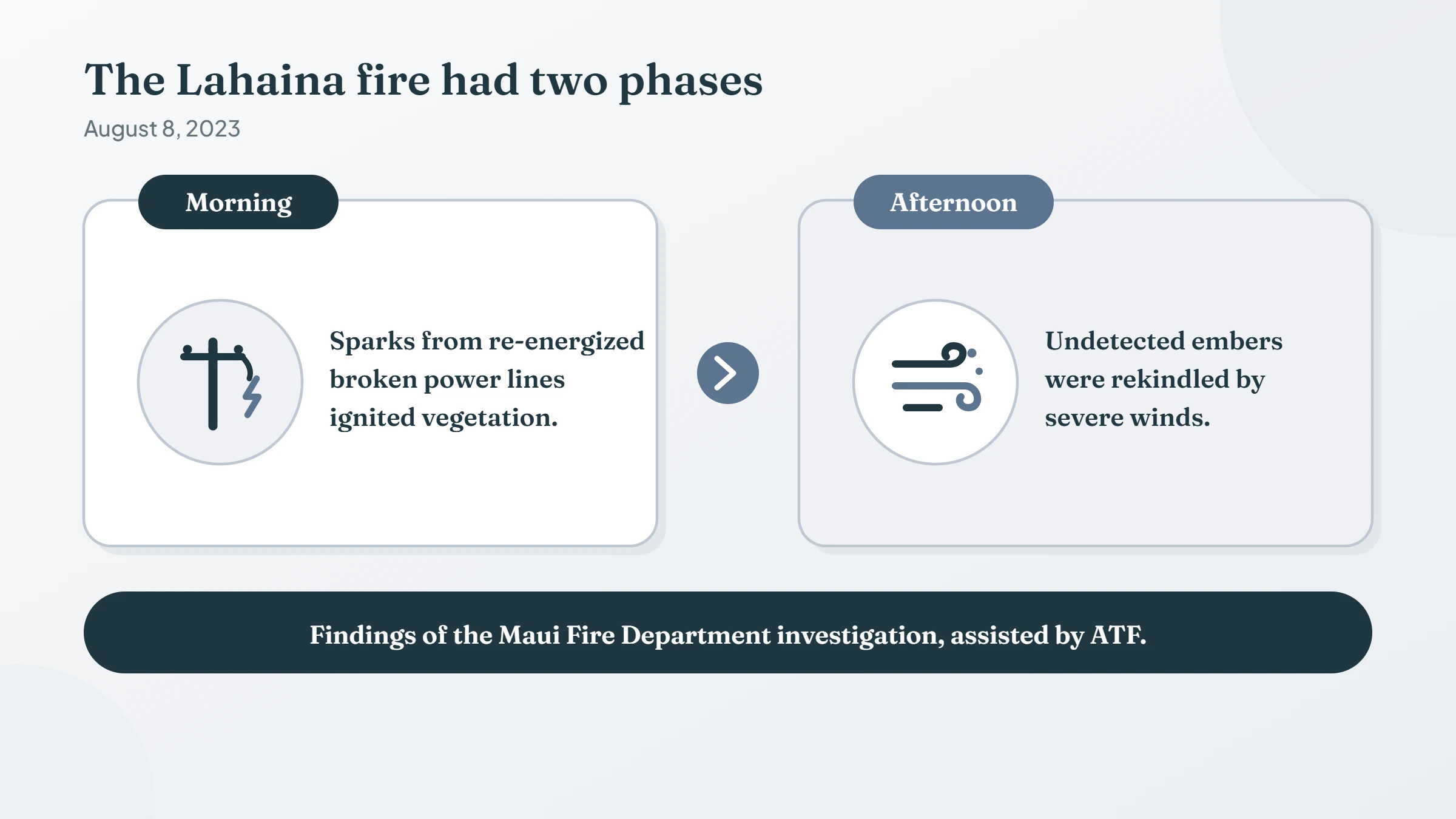
An investigation by the Maui Fire Department, assisted by the federal Bureau of Alcohol, Tobacco, Firearms and Explosives, found that the Lahaina fire originated when sparks associated with re-energized broken power lines ignited vegetation.
The investigators concluded that the fire had a morning phase and an afternoon phase. Undetected embers from the morning fire were later rekindled during severe winds.
The County of Maui’s origin and cause announcement explains the investigation. Its findings about the Lahaina fire’s origin should be understood separately from the allegations and legal defenses involving the defendants.
How Is the $4.037 Billion Settlement Divided?
The global settlement is divided between an Individual Settlement Fund and a Class Settlement Fund.
| Fund | Gross Allocation | Purpose |
|---|---|---|
| Individual Settlement Fund | $3.902 billion | Addresses eligible individual claims through the Individual Settlement Program. |
| Class Settlement Fund | $135 million | Addresses eligible claims through the separate class settlement process. |
| Total | $4.037 billion | The combined global settlement amount. |
The $3.902 billion figure is the remainder after subtracting the $135 million class allocation from the global amount. It should not be treated as the exact amount available for individual checks after all applicable credits, holdbacks, costs, and other obligations.
A Hawaiʻi Supreme Court opinion discusses the class settlement and its $135 million allocation.
Can You Receive Money From Both Funds?
The class settlement notice says a claimant cannot receive benefits from both the Class Settlement Fund and the Individual Settlement Fund.
Your attorney or the appropriate administrator can help you identify which program handles your claim.
What Is the $500 Million Holdback?
The settlement agreements provide for $500 million of the total settlement payments to be reserved for resolving certain claims brought by people who do not release their claims through either settlement agreement.
This holdback is part of the global settlement amount. It is not an additional $500 million added to the $4.037 billion.
Is the One ʻOhana Fund Part of the Global Settlement?
The One ʻOhana Fund, formally known as the Maui Wildfires Compensation Program, is a separate program created to provide expedited compensation for eligible death and serious physical injury claims.
Contributions made by defendants to the One ʻOhana Fund receive credits under the global settlement agreements. That is why adding the program’s $175 million to the $4.037 billion headline figure would be misleading.
Your release and program documents determine how a One ʻOhana payment relates to your individual situation.
When Will Maui Wildfire Settlement Payments Begin?
The Individual Settlement Program has announced that rolling payments are scheduled to begin on November 4, 2026.
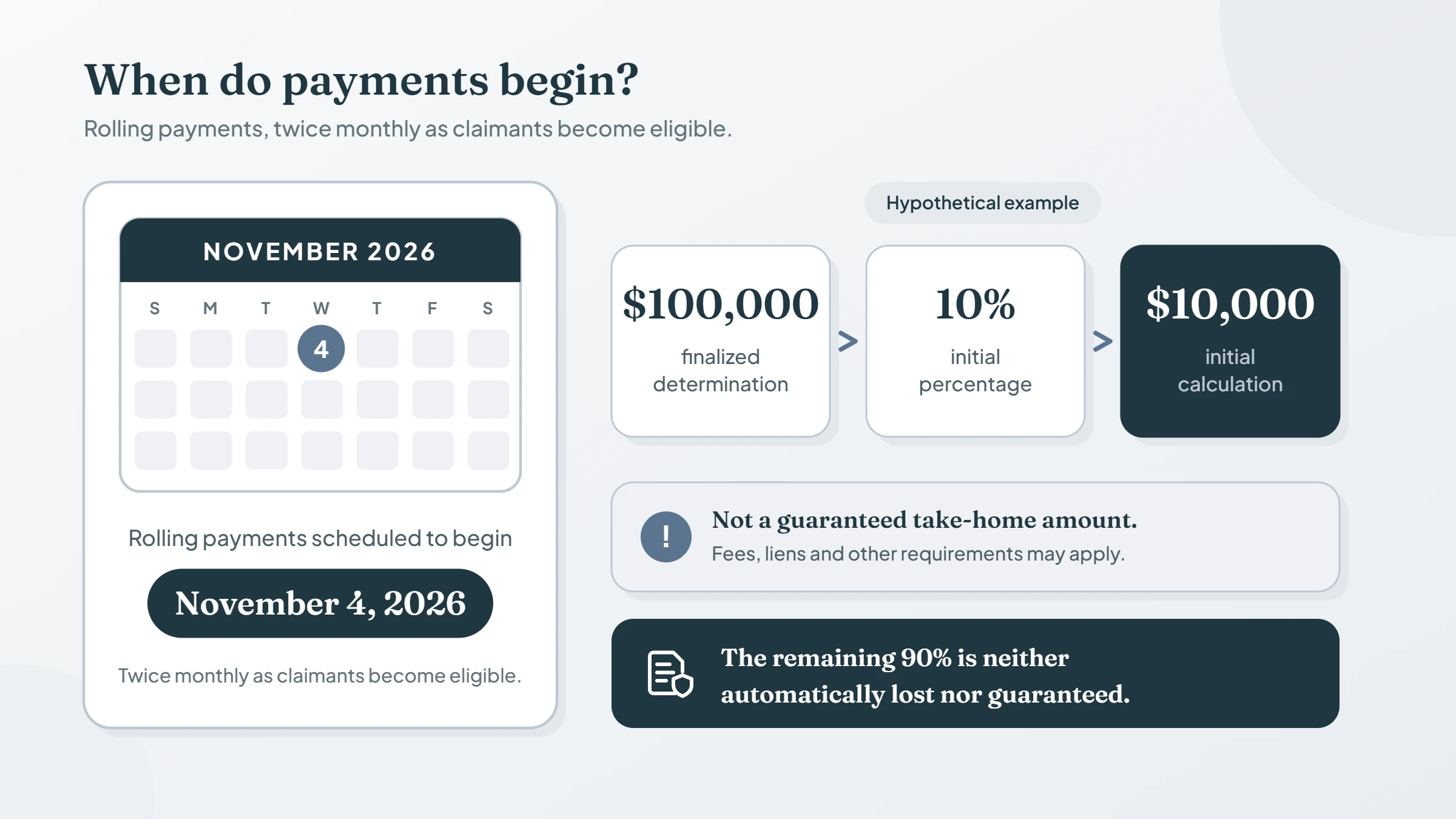
The program says payments will be issued twice per month as additional claimants become eligible. The first announced pro rata payment percentage is 10%.
A claim must be finalized and meet the program’s payment requirements before a distribution can be issued. A claimant who is waiting for documents, a dismissal order, or another required step may receive payment later.
Your attorney can check the status of your claim and explain what remains outstanding.
What Does the Initial 10% Payment Mean?
The 10% figure is the program’s initial pro rata payment percentage. It applies to finalized claim determinations.
The program says its special masters anticipate increasing the percentage as more claims are finalized and additional settlement funding becomes available. The final cumulative percentage has not been announced.
Here is a simplified illustration:
| Finalized Claim Determination | Initial 10% Calculation |
|---|---|
| $100,000 | $10,000 |
| $250,000 | $25,000 |
| $500,000 | $50,000 |
These figures illustrate the calculation only. They are not guaranteed take-home amounts. Applicable fees, liens, holdbacks, payment requirements, and your individual documents can affect what you receive.
The 10% initial percentage does not mean that a claimant has automatically lost the other 90% or that the remaining 90% is guaranteed to be paid. Later distributions depend on the settlement process and available funds.
The official program FAQ explains the initial percentage and rolling payment schedule.
How Much Will Each Person Receive?
There is no single Maui wildfire settlement payout per person.
The Individual Settlement Program evaluates claims according to the applicable settlement plan and claims regulations. People experienced different losses, submitted different evidence, and may have different deductions.
A claimant may have more than one type of loss. Someone who lost a home, for example, may also have a claim involving damaged belongings or eligible displacement expenses.
The amount shown in a claim determination should be read alongside the program’s payment percentage and your disbursement information. Your attorney can explain the figures in your notice.
Why an “Average Payout” Can Be Misleading
Dividing $4.037 billion by the number of claimants may produce an average on a calculator, but it does not predict an individual award.
The global figure covers two settlement tracks and includes amounts subject to credits, holdbacks, and other obligations. Claims also vary significantly.
Your own determination and payment documents are more useful than a headline average.
How Are Maui Wildfire Claims Evaluated?
The Individual Settlement Program considers eligible claims under its settlement plan and claims regulations. The information required depends on the type of loss.
| Type of Loss | Examples of Relevant Information |
|---|---|
| Property damage | Ownership records, property details, and evidence of damage. |
| Personal belongings | Information about items damaged or destroyed and their value. |
| Displacement expenses | Housing and other eligible expenses incurred after the fires. |
| Lost income or business losses | Employment, income, or business records supporting the claimed loss. |
| Physical injury or wrongful death | Medical records, appropriate claim documents, and proof of authority where an estate or representative is involved. |
| Emotional distress | Information required under the applicable claim category and program rules. |
The list above is an overview. The administrator may require additional records, and eligibility depends on the program’s specific rules.
If you receive a deficiency notice, read it promptly. It identifies information or documents the program needs to evaluate a claim. A determination notice may also provide a period to respond or request reconsideration.
Who Handles the Settlement?
The Maui Fire Cases Individual Settlement Program evaluates and administers individual claims. Four court-appointed special masters oversee the program, and BrownGreer PLC serves as the claims processor.
A separate administrator handles the class settlement.
If you have an attorney, your firm can explain notices, deadlines, and your claim status. Unrepresented individual-program claimants can contact BrownGreer through the Maui Wildfire Cases Portal.
How Will I Receive My Payment?
The individual program says payments for represented claimants are sent to their law firms for disbursement. Your attorney can explain the process your firm uses.
Unrepresented claimants can choose an available payment method through the program’s required payment documentation.
What Can Reduce a Maui Settlement Payment?
A settlement determination and the amount deposited into your account may be different.
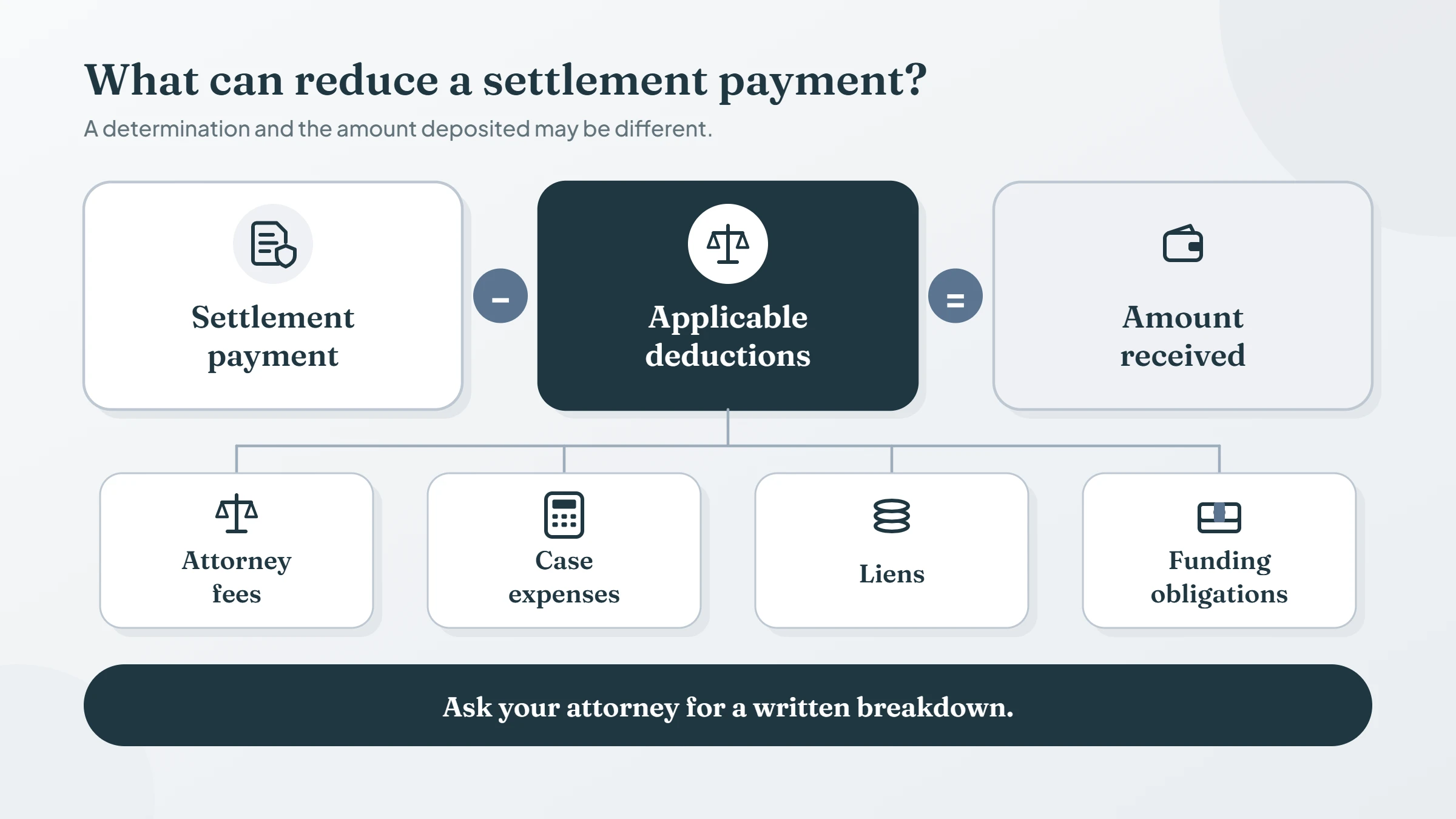
Depending on your circumstances, the difference can involve:
- Applicable attorney fees.
- Case expenses.
- Insurance or medical liens.
- Existing lawsuit funding obligations.
- Other required deductions or holdbacks.
Ask your attorney for a written breakdown. It should help you understand the amount being paid, any deductions, and the amount you will receive.
Attorney Fees
In September 2026, the Hawaiʻi Supreme Court upheld the circuit court’s authority to establish a tiered attorney-fee schedule and a $222 million Common Benefit Fund, while removing certain restrictions on review of fee decisions.
The scheduled fee ceilings depend on factors including when the claimant retained counsel and the status of the case. They include categories of 3%, 8.33%, and 10%, with additional procedures and exceptions.
Your own fee arrangement and any applicable court orders matter. The Hawaiʻi Supreme Court opinion explains the fee order.
Insurance and Medical Liens
A lien is a claim against settlement proceeds for an amount someone says they are owed.
The Individual Settlement Program has a court-approved agreement addressing certain property and casualty insurance liens. The program describes percentages based on insurance payments, with different treatment for certain commercial claims.
Medical liens and other obligations may require separate attention. The amount and treatment of a lien depend on your claim and the applicable agreement.
FEMA Assistance
The Individual Settlement Program says it will not deduct FEMA assistance from a monetary award under the court’s June 2025 order. Claimants remain responsible for coordinating with FEMA about any potential duplication of benefits.
Can You Sell Your Maui Wildfire Settlement Payments?
You may be able to sell eligible Maui wildfire settlement payment rights for a lump sum. Eligibility depends on your claim, the rights you hold, your settlement documents, and applicable law.
MySettlement purchases eligible Maui wildfire settlement payment rights. Our team can discuss your arrangement and review the information needed to determine if a purchase may be available.
The first step is understanding exactly what you have:
- Has your claim determination been finalized?
- Have any payments already been issued?
- Are future payments established, and what conditions apply?
- Are there liens or existing funding agreements?
- Does your agreement restrict a transfer?
A finalized claim determination does not necessarily establish a guaranteed schedule for the unpaid balance. The program has announced an initial payment percentage, while later percentages remain subject to the settlement process.
Does a Sale Require Court Approval?
Some transfers do. The answer depends on the type of payment rights and the law that applies.
For a transfer covered by Hawaiʻi’s structured settlement protection law, Hawaiʻi Revised Statutes §676-3 requires advance approval and specified findings, including that the transfer is in the payee’s best interests.
Other Maui settlement payment arrangements require their own review. Your attorney can help you understand the terms and any approval requirements.
Considering Selling Your Maui Settlement Payments?
MySettlement can review eligible payment arrangements and explain the information needed to consider a purchase.
How Does Selling Settlement Payments Work?
The process begins with a review of your settlement documents. A buyer needs to understand the payment rights, any conditions attached to them, and the amounts that may be subject to liens or other obligations.
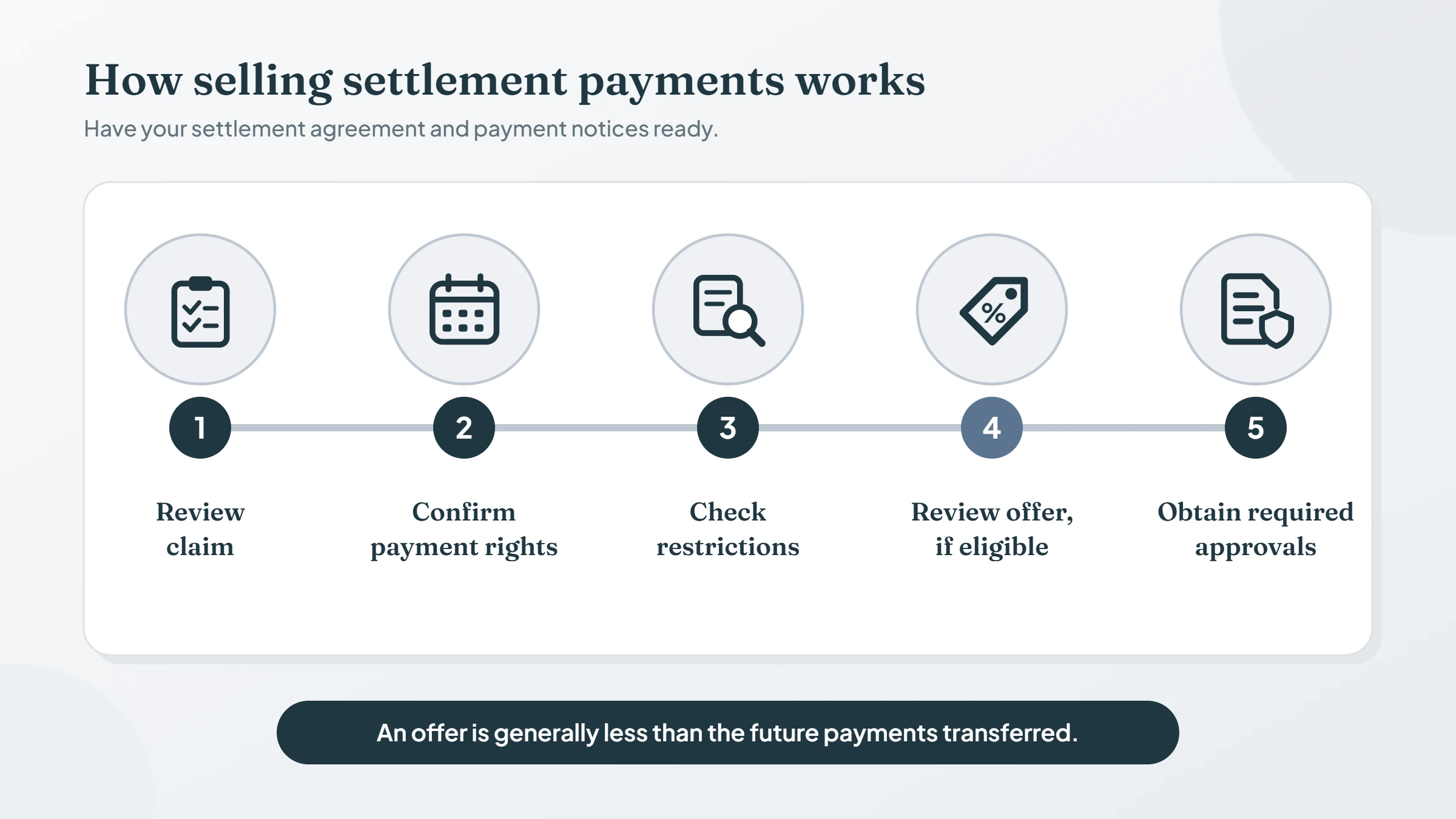
A typical discussion includes:
- Your claim status. The buyer reviews your determination and available payment notices.
- Your payment rights. The documents help establish what rights exist and who owns them.
- Restrictions and obligations. The review considers liens, prior funding, transfer restrictions, and applicable law.
- A purchase offer, if eligible. You can review the proposed amount and terms before deciding.
- Required approvals and completion. The steps depend on the transaction and any applicable approval requirements.
An offer to purchase future payment rights is generally less than the total future amount being transferred. The difference reflects factors such as timing, uncertainty, and transaction costs.
Your attorney can help you compare an offer with waiting for payments under the settlement program.
What Documents Should You Have Ready?
The documents needed depend on your situation. Useful items to discuss with MySettlement and your attorney include:
- Your settlement agreement and release.
- Your claim determination notice.
- Payment notices and a record of amounts already received.
- Information about attorney fees and liens.
- Documents relating to prior funding or assignments.
- Any court order or other document affecting your payment rights.
Are Maui Wildfire Settlement Payments Taxable?
Federal tax treatment depends on the recipient, the type of payment, the losses involved, and other circumstances.
In September 2026, the Doug LaMalfa Federal Disaster Tax Relief Certainty Act added Internal Revenue Code Section 139M. The law excludes qualifying wildfire relief payments received by individuals from federal gross income, subject to its requirements.
The law includes limitations concerning losses already compensated through insurance or other sources. It also contains rules intended to prevent a double tax benefit.
The exclusion does not mean every payment connected to the Maui fires is automatically tax-free. A tax professional can review your settlement allocation, insurance recoveries, and any proposed sale of payment rights.
Read the federal law or speak with a qualified tax adviser about your circumstances.
Have Questions About Selling Your Maui Settlement Payments?
MySettlement can discuss your payment arrangement and review eligible rights for a potential purchase.
Frequently Asked Questions
How much is the Maui wildfire settlement?
The global settlement totals $4.037 billion. It is divided between the Individual Settlement Fund and the Class Settlement Fund.
How much will each Maui wildfire claimant receive?
There is no fixed amount for every claimant. Individual determinations depend on the claims submitted, the applicable program rules, and supporting evidence. Fees, liens, and other obligations can affect the amount received.
When will Maui wildfire settlement checks be sent?
The Individual Settlement Program says rolling payments are scheduled to begin November 4, 2026, and continue twice monthly as claimants become eligible. A person’s actual payment date depends on the status of their claim and payment requirements.
Does the 10% announcement mean claimants will receive only 10%?
No. The announced 10% is the initial pro rata payment percentage. The program anticipates increasing the percentage as claims are finalized and additional funding is received. The ultimate percentage has not been announced.
Can I still file a Maui wildfire settlement claim?
The Individual Settlement Program’s published deadlines for releases, questionnaires, and supporting documents were in 2025. If you have questions about a late submission or an existing claim, contact your attorney or the program for guidance.
Can I sell my Maui wildfire settlement?
MySettlement purchases eligible Maui wildfire settlement payment rights. A potential purchase depends on the rights you hold, your documents, applicable restrictions, and the results of the review.
Will selling my payment rights affect how much I receive?
Yes. A sale exchanges the payment rights described in your agreement for an agreed lump sum. The lump sum is generally less than the total amount of future payments being transferred. Review the offer and its costs carefully with your attorney.
Who can answer questions about my Maui settlement claim?
Your attorney is the best contact for questions about your individual claim, deductions, and settlement documents. Individual-program claimants can also contact the claims processor through the official Maui Wildfire Cases Portal.