
- Structured Settlements
- What are Structured Settlements
- Best Structured Settlement Buyers
- How Selling Works
- Eligible Cases
- Eligibility Criteria
- Structured Settlement Regulations
- J&J Settlement
- Maui Wildfire Settlement
- Types of Structured Settlements
- Guaranteed Structured Settlements
- Increasing Structured Settlements
- Deferred Structured Settlements
- Life-Contingent Structured Settlements
- Future Lump Sum Settlements
- Annuities
- What Is An Annuity
- Guide to Selling an Annuity
- Income Annuities
- How Are Annuities Taxed?
- 7 Common Annuity Mistakes & How to Avoid Them
- Annuity Beneficiaries
- Types of Annuities
- Fixed Annuities
- Fixed Index Annuities
- Variable Annuities
- Immediate Annuities
- Deferred Annuities
- Registered Index-Linked Annuity
- Pre-Settlement Funding
- What is Pre-Settlement Funding
- How Pre-Settlement Funding Works
- Eligible Cases for Pre-Settlement Funding
- Pre-Settlement Funding Criteria
- Pre-Settlement Funding Regulations
- Types of Pre-Settlement Funding
- Non-Recourse Cash Advances
- Structured Pre-Settlement Funding
- One-Time Lump Sum Cash Advances
- Compounding Interest Funding
- Flat-Fee Structured Funding
- Structured Settlement Calculator



One specialist stays with you from your first call through funding.
November, 2026
Want your pre-settlement advance paid in one go?
That’s what a one-time lump sum offers: an agreed advance paid in a single disbursement while your claim is pending. You decide how to spread the money across your expenses.
The part to look at closely is the payoff. Receiving one payment doesn’t automatically mean you’ll pay one fixed fee. Depending on the offer, charges can grow until repayment.
Here’s how the arrangement works and what to check before you choose one.
What Does “One-Time Lump Sum” Mean?
A lump sum is money paid together in one amount. In pre-settlement funding, it describes how you receive your advance.
For example, you might receive $5,000 in one payment. That money comes from a funding company under an agreement tied to your potential case recovery. It isn’t the defendant paying your final settlement early.
Three details tell you what you’re actually accepting:
- The disbursement: How much money is paid, when, and to whom.
- The repayment terms: When you owe money and which circumstances trigger repayment.
- The pricing: The fees and charges used to calculate the payoff.
“One-time” answers the first question. You still need answers to the other two.
How Do You Get a Lump-Sum Advance?
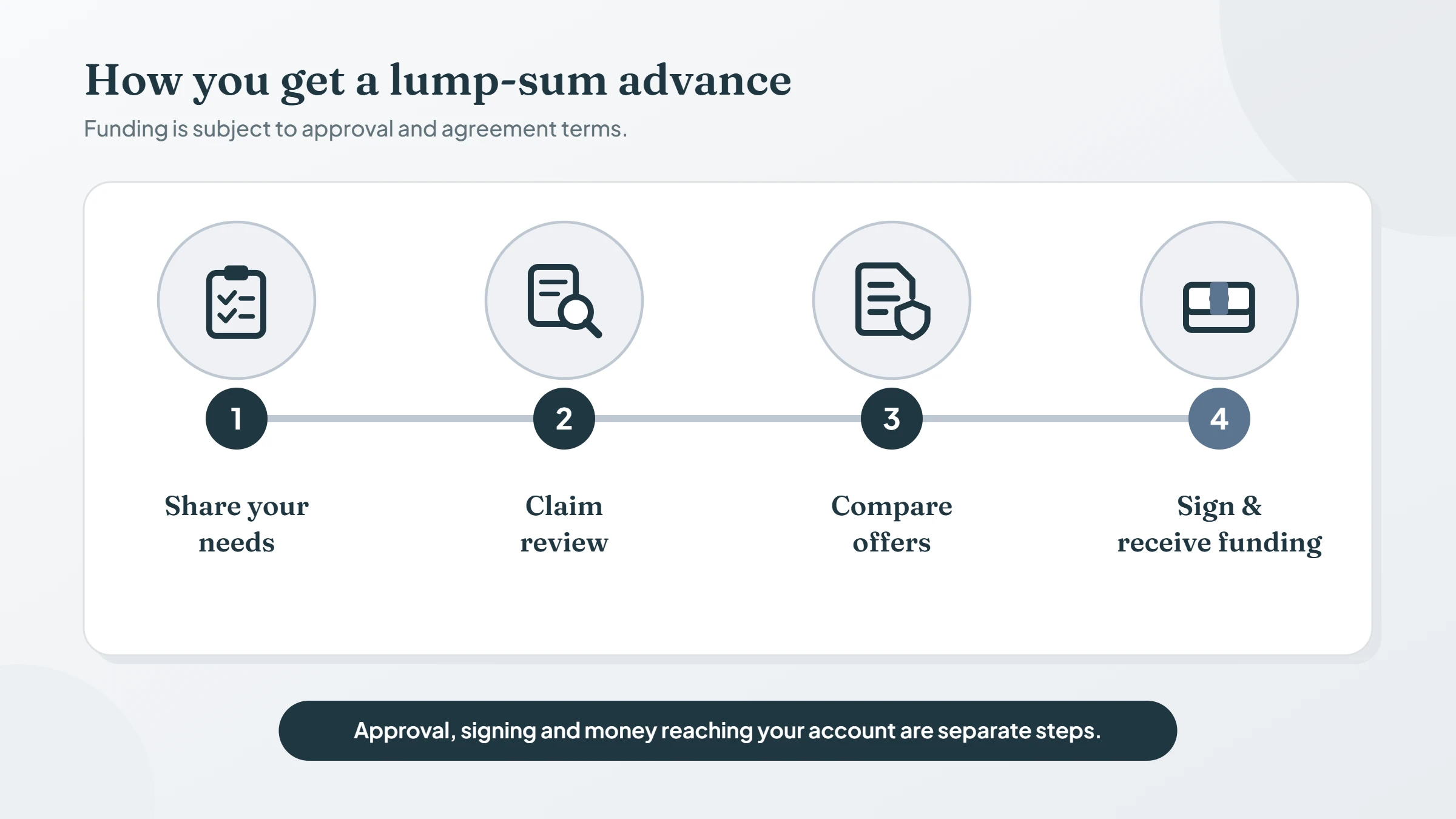
You start by telling us the amount you’re looking for and sharing your attorney’s contact details. MySettlement connects you with multiple funding offers so you can compare your options.
A participating funder reviews your claim with information from your attorney. The review can include the evidence, potential recovery, available insurance, and existing funding obligations.
An approved offer should explain the cash available, charges, and repayment terms. Read it with your attorney before signing. Once the required paperwork and funding conditions are complete, the funder sends the approved disbursement.
Ask when the money is expected to arrive. Approval, contract signing, and money reaching your account are separate steps.
How Much Can You Receive?
The amount depends on your claim and the funder’s review. A potential settlement value isn’t a promise that the case will recover that amount—or that a funder will advance a particular percentage.
Your existing obligations matter too. Attorney fees, case expenses, liens, and earlier funding can affect how much recovery may be available to support another advance.
A useful question is: “How much cash will I actually receive?”
Ask the funder to identify:
- The amount paid directly to you.
- Any money paid elsewhere on your behalf.
- Any fees deducted or added to the funding balance.
- Any amount used to pay off existing funding.
Two offers showing the same headline amount can leave you with different amounts to spend.
Does One Payment Mean One Fixed Cost?
It can, if the agreement uses a genuinely fixed charge. Other offers use charges that increase over time.
Simple charges are calculated on the original advance. Compound charges add accrued charges to the balance used for later calculations. A flat fee may stay fixed, although you should check for pricing bands or additional charges.
A fixed percentage also needs a time period. “3% per month” and “3% total” describe very different costs.
What That Could Look Like in Dollars
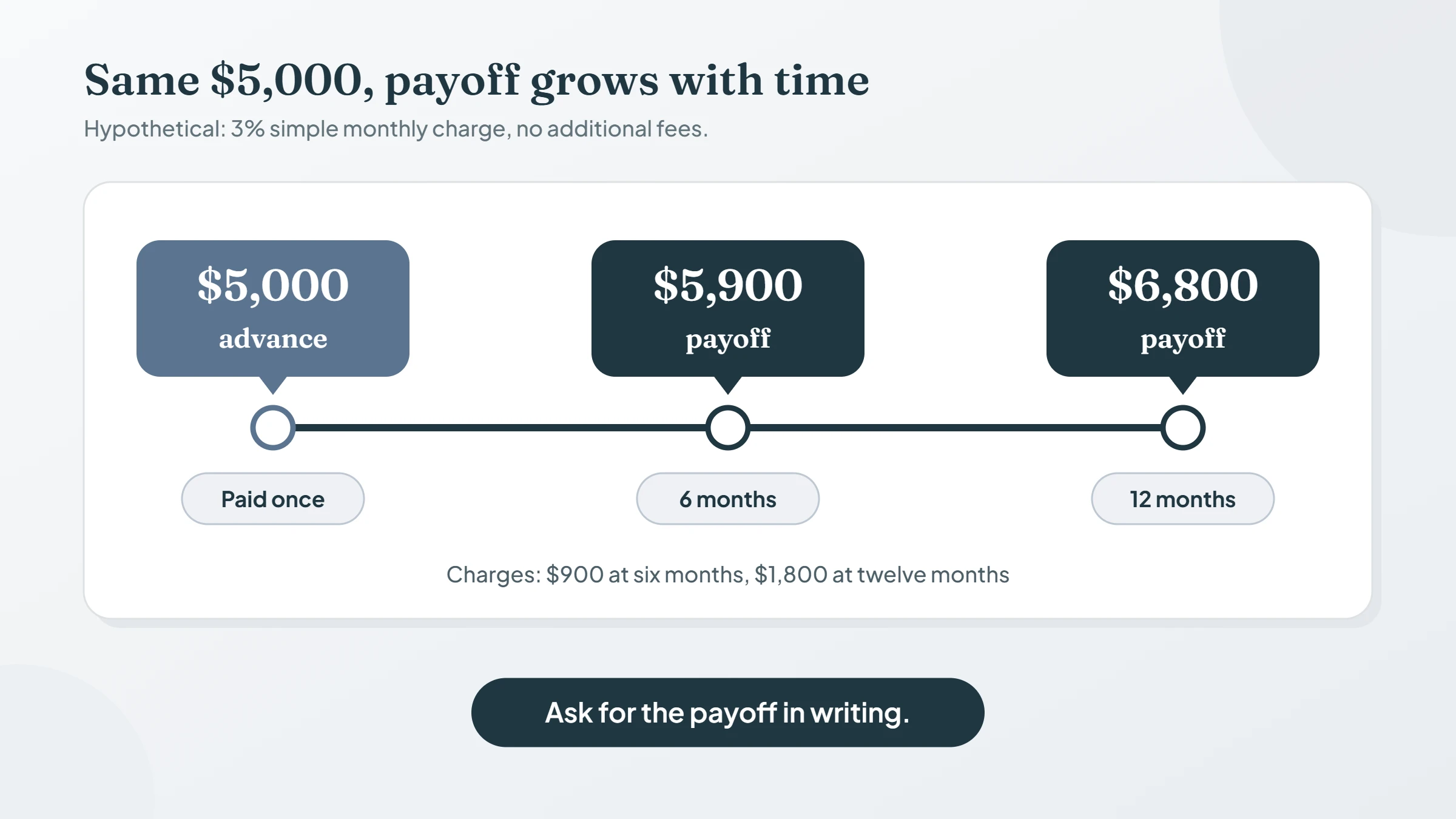
Suppose you receive $5,000 once, with a 3% simple monthly charge and no additional fees.
| Time until repayment | Money already advanced | Funding charges | Total payoff |
|---|---|---|---|
| Six months | $5,000 | $900 | $5,900 |
| Twelve months | $5,000 | $1,800 | $6,800 |
You received the same $5,000 in both situations. The extra time increased the charges.
The $6,800 payoff includes returning the original $5,000 plus $1,800 in charges. These figures are hypothetical, not MySettlement rates or a quote.
Get the Payoff in Writing
Ask what you’d owe at six, twelve, eighteen, and twenty-four months, including every fee. Check any maximum payoff and when charges stop accruing.
State requirements differ. Ohio Revised Code § 1357.03, for example, requires covered agreements to disclose the funded amount, itemized charges, and specified maximum obligations.
A Lump Sum or Monthly Advances?
Think about how much you need access to now and what the available offers cost.
| Your question | One-time lump sum | Scheduled monthly advances |
|---|---|---|
| When do I receive money? | One approved disbursement | Payments on an agreed schedule, subject to its conditions |
| Who manages the budget? | You spread the advance across your expenses | The payment schedule controls when more cash arrives |
| What should I check about costs? | Charges may apply to the full disbursed amount, including money you haven’t spent | Check when charges begin on each payment |
| Is more funding automatic? | Another advance may need a new approval | Future payments depend on the agreement |
A single advance can cover several months of expenses. You don’t have to spend it all at once.
The cost deserves attention, though. If charges run on the full disbursed balance, setting some money aside doesn’t stop those charges.
What Happens When Your Case Ends?
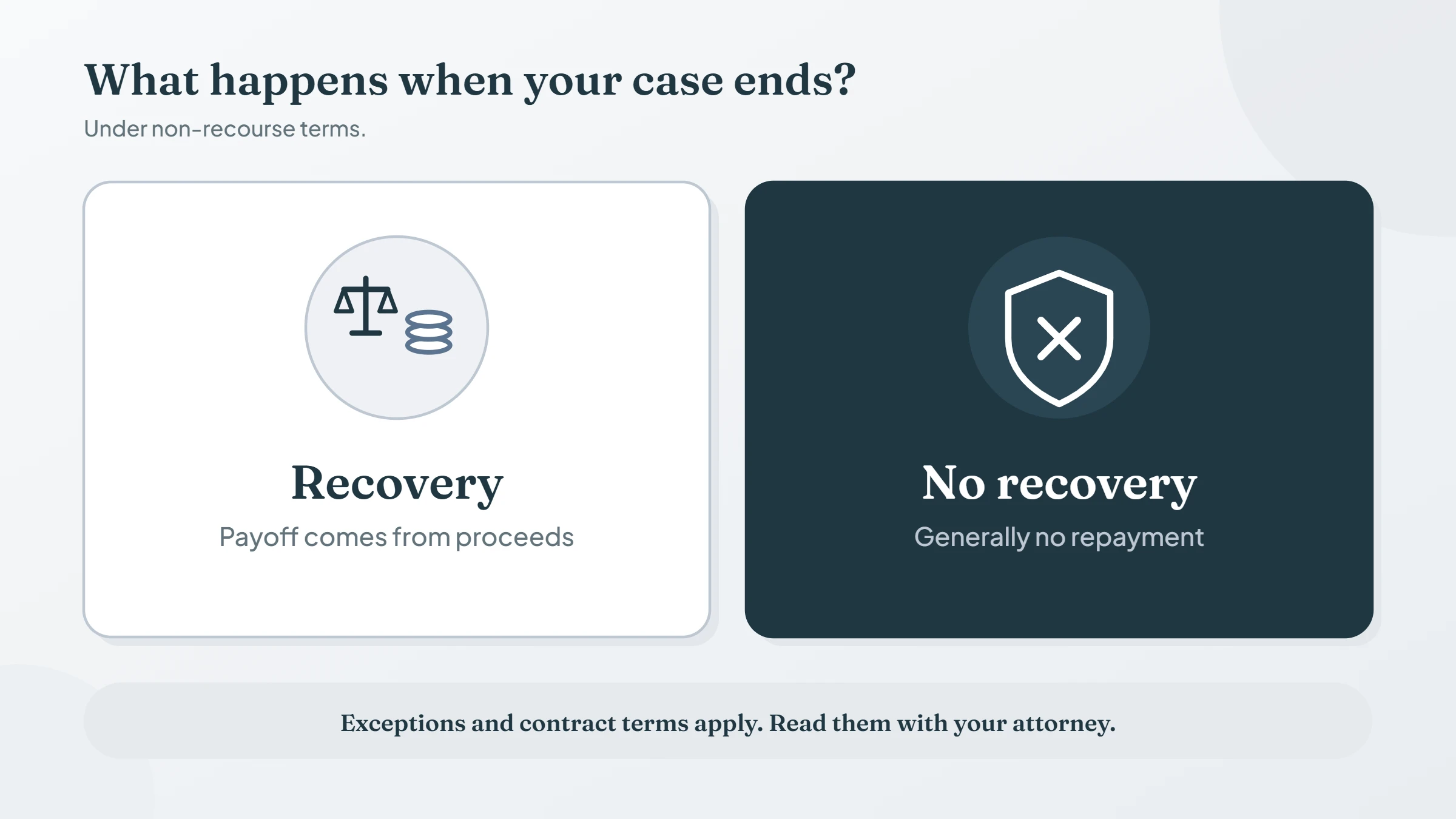
Under non-recourse terms, repayment generally comes from available proceeds after a successful settlement or award. Your attorney usually coordinates the funder’s payment when distributing the recovery.
That deduction affects how much you receive at the end. Ask your attorney to explain the expected deductions, including funding, legal fees, expenses, and liens. Their amounts and payment priorities depend on your circumstances.
An ordinary unsuccessful claim producing no recovery generally means no repayment under non-recourse terms. Read the exceptions involving fraud, misrepresentation, or material breach. Also ask how the agreement handles a recovery that is smaller than expected.
Compare Lump-Sum Funding Offers Through MySettlement
You don’t have to judge an offer by the amount alone.
MySettlement connects you with multiple pre-settlement funding offers. You can compare the cash available, charges, payoff amounts, and repayment terms before deciding which available option suits your needs.
Tell us the amount you’re considering and disclose any existing funding. The participating funder determines approval and the terms offered.
Frequently Asked Questions
Can I apply for more funding later?
Some funders consider additional advances. A later request may need another review, and existing agreements and state rules can affect your options. Receiving one advance doesn’t guarantee another.
Do I have to make monthly repayments?
A non-recourse offer may defer repayment until your case produces proceeds. Confirm that in the agreement. Monthly funding charges and monthly repayment bills are separate things.
Can I cancel after receiving the money?
Check your agreement and applicable state law promptly. Covered Ohio agreements provide 10 business days after funding, provided you return the full disbursed amount through the required procedures. Cancellation periods and procedures vary by state.