



One specialist stays with you from your first call through funding.
November, 2026
A life-contingent structured settlement provides one or more payments that depend on someone being alive. That person is usually the settlement recipient, but the agreement determines whose life controls the payments.
Some life-contingent settlements provide monthly payments for life. Others include payments that last for a limited number of years or a future lump sum payable only if the recipient is alive on a certain date.
The details matter, especially when it comes to your family. Some payments stop after the covered person dies. Others continue to a beneficiary under a guaranteed-period or survivor provision.
Let’s look at how these settlements work, what happens after death, and what to consider if you’re thinking about selling future payments.
How Does a Life-Contingent Structured Settlement Work?
A structured settlement pays compensation over time according to an agreed schedule. The schedule may include monthly payments, annual payments, future lump sums, or a combination of these.
A life-contingent payment has an additional condition: the person named in the agreement must be alive for the payment to be due.
The person whose life determines the payment is called the measuring life. Often, this is the injured person receiving the settlement. The agreement identifies the measuring life and explains the conditions attached to each payment.
Here’s a simple example.
Imagine Sarah receives $2,000 per month for life. Her settlement has no guaranteed period or survivor benefit.
| How long Sarah receives payments | Total received |
|---|---|
| 10 years | $240,000 |
| 20 years | $480,000 |
| 25 years | $600,000 |
These amounts are examples, not predictions. Sarah’s actual total depends on how long payments continue under her agreement.
If Sarah lives beyond 25 years, her lifetime payments continue, subject to the contract and the insurer’s ability to pay. If she dies earlier, the life-only payments stop under this example.
Not every life-contingent settlement follows the same pattern. Some include a guaranteed period that protects payments for a set number of years, even if the recipient dies during that time.
Why Do Structured Settlements Include Life-Contingent Payments?
A serious injury can create expenses that last for years. Medical appointments, rehabilitation, housing needs, and everyday bills may continue long after a lawsuit ends.
Life-contingent payments can be designed to provide ongoing income for as long as the covered person lives. That feature can be helpful when no one knows how long future support will be needed.
The value of lifetime income is easier to understand when you consider how much life spans can vary. The Centers for Disease Control and Prevention reported that U.S. life expectancy at birth reached 79 years in 2024. That is a population average, though. It does not predict how long any individual will live or how long a particular settlement will pay.
A life-contingent arrangement shifts some of that uncertainty into the payment design. A person who lives longer than expected may continue receiving payments for many years.
At the same time, a life-only arrangement may provide fewer total payments if the covered person dies earlier. That tradeoff is one reason it’s important to understand the exact terms.
Types of Life-Contingent Structured Settlement Payments
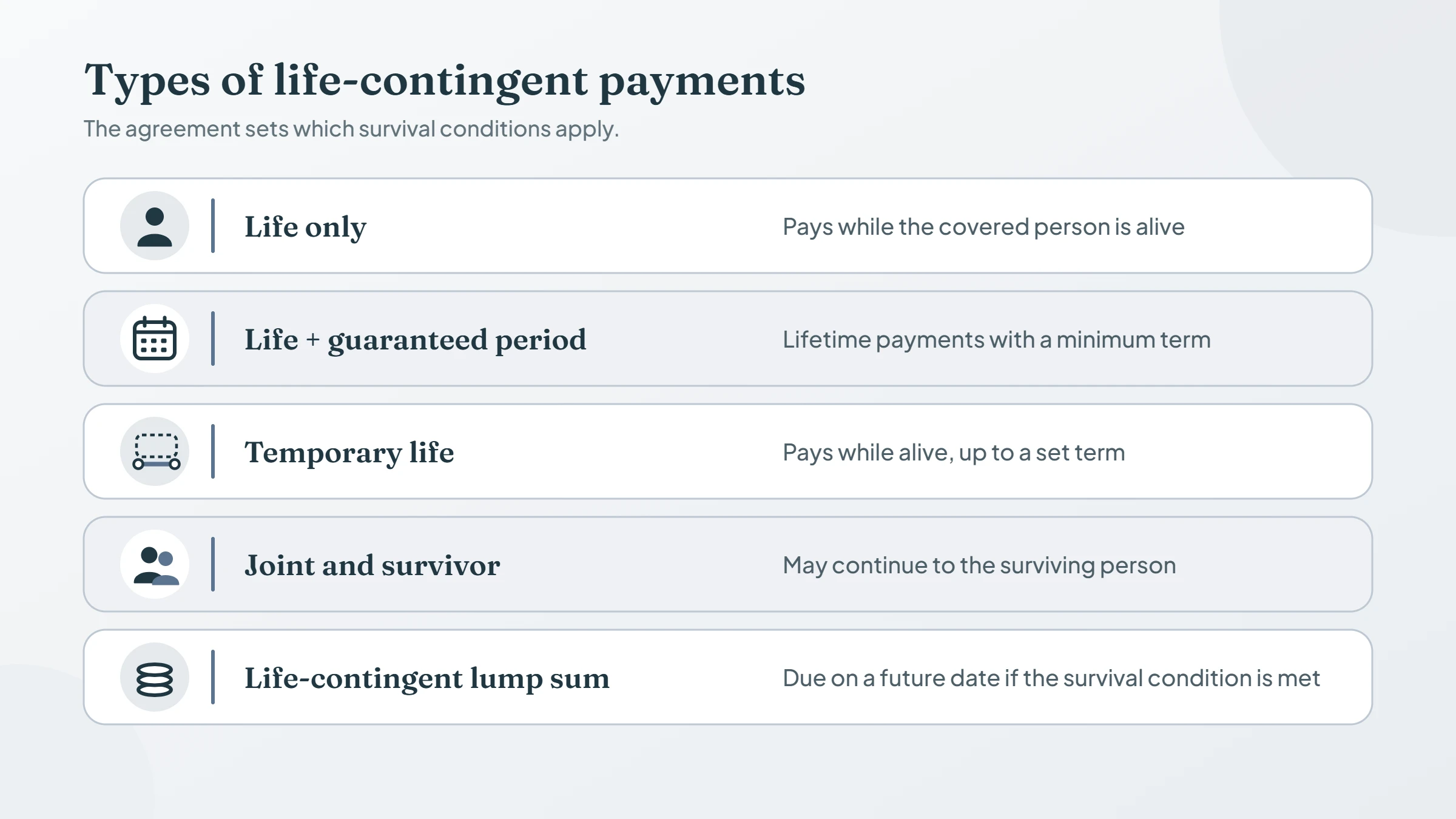
The phrase life-contingent does not describe just one type of payment schedule. A settlement may contain one or more of the following arrangements.
1. Life-Only Payments
Life-only payments continue for the lifetime of the measuring life.
If the measuring life dies, the payments generally stop. A family member does not automatically receive the payments afterward unless the agreement includes a separate benefit.
A life-only option can provide a higher periodic payment than an otherwise comparable option that includes a guaranteed period. The tradeoff is that a beneficiary may receive no payments after death.
2. Life Payments With a Guaranteed Period
This arrangement combines lifetime income with a minimum payment period.
Imagine Daniel receives $3,000 per month for life, with 20 years guaranteed.
- If Daniel dies after eight years, payments for the remaining 12 years of the guaranteed period would generally be paid according to the agreement’s beneficiary provisions.
- If Daniel lives beyond 20 years, his payments continue for life under the life-contingent portion of the arrangement.
The Washington State Office of the Insurance Commissioner describes this as a life payment option with a period certain. The exact beneficiary and payment terms depend on the contract.
3. Temporary Life Payments
Temporary life payments continue for a set period only while the measuring life is alive.
Suppose a settlement provides $1,500 per month for up to 15 years. If the measuring life lives through the full 15 years, the payments end when that period ends. If the person dies earlier, the life-contingent payments generally stop at death.
A temporary life payment is different from a payment that is guaranteed for 15 years. The word guaranteed matters.
4. Joint-and-Survivor Payments
Joint-and-survivor payments depend on the lives of two people.
Under the agreement, payments may continue to the surviving person after the first person dies. The survivor might receive the same amount or a reduced amount, depending on the payment terms.
This arrangement can help support a spouse or another named person, but the settlement documents must be reviewed to determine who qualifies and how much they may receive.
5. Life-Contingent Lump Sums
Life-contingent payments do not have to arrive every month.
A settlement might provide a lump sum of $50,000 on a future date, payable only if the measuring life is alive on that date.
The Society of Actuaries explains that a future structured settlement lump sum can be either guaranteed or life contingent. The difference can determine whether the payment is made if the measuring life dies before the scheduled date.
Life-Contingent vs. Guaranteed Structured Settlements
The main difference is what determines whether a payment is due.
A life-contingent payment depends on the survival condition in the agreement. A guaranteed payment is scheduled for a specified period or date regardless of whether the measuring life is alive to receive it.
| Feature | Life-contingent payment | Guaranteed payment |
|---|---|---|
| Payment condition | Depends on the survival condition in the agreement | Does not depend on the measuring life surviving to the payment date |
| Payment duration | May continue for life or for a limited period while the person is alive | Follows the specified payment period or dates |
| Total amount | May be uncertain, especially for lifetime payments | The scheduled payment amounts and dates are generally stated in the agreement |
| After death | A purely life-contingent payment generally stops when its survival condition is no longer met | Remaining guaranteed payments generally follow the beneficiary provisions |
| Can both appear in one settlement? | Yes | Yes |
A settlement can include both types. For example, someone might receive payments for life with 20 years guaranteed. The first 20 years include a guarantee; payments after that period depend on the covered person remaining alive.
Our guide to the different types of structured settlements explains other ways payment schedules can be arranged.
What Happens to Life-Contingent Payments After Death?
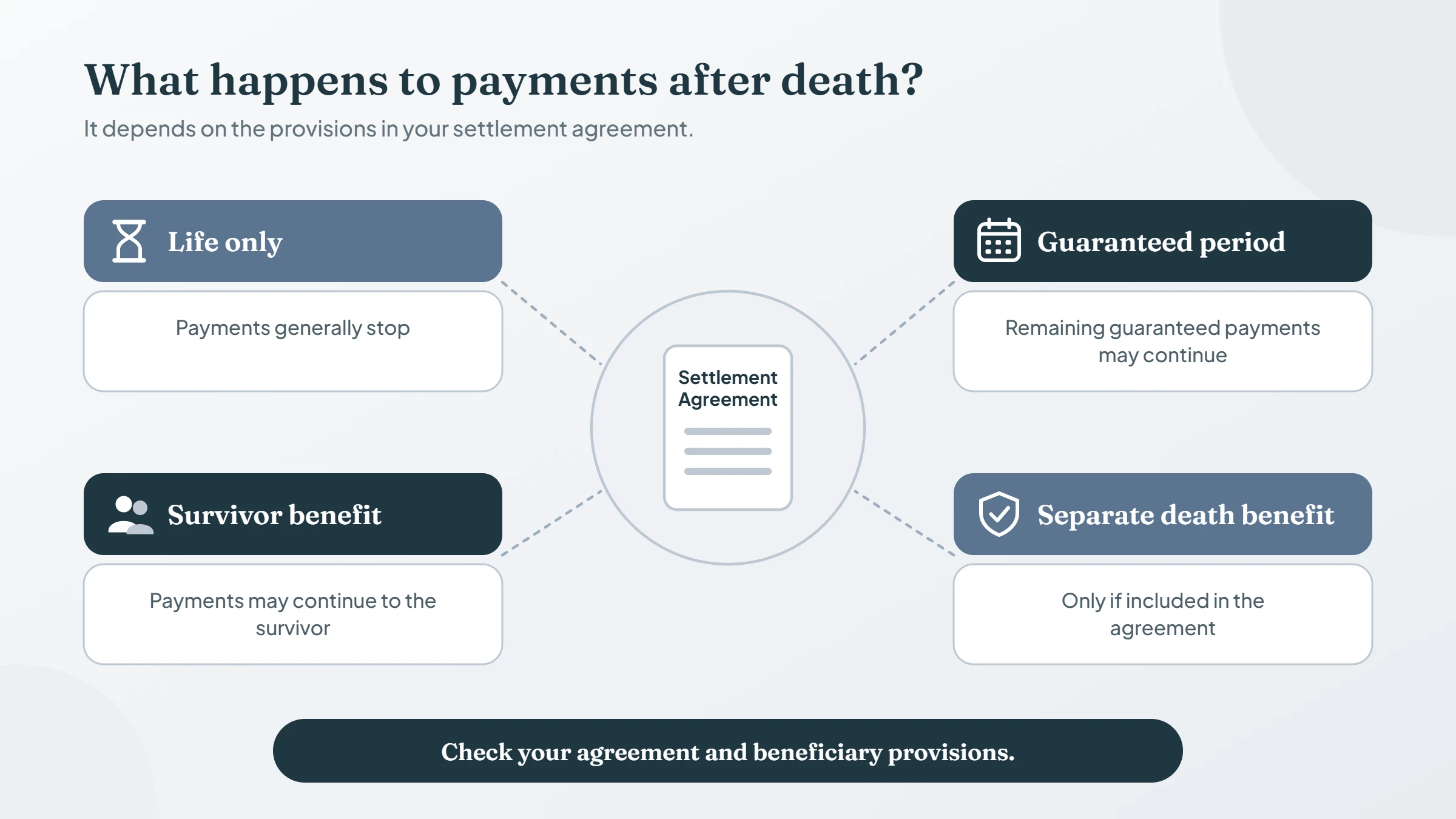
The answer depends on the payment terms. No single rule applies to every life-contingent structured settlement.
If the Payments Are Life Only
Life-only payments generally stop when the measuring life dies. The family has no automatic unused balance to collect.
That point can be surprising. A structured settlement is not necessarily an account holding a cash balance that passes to heirs. The payment schedule defines what is owed and when.
If There Is a Guaranteed Period
If the measuring life dies before the guaranteed period ends, the remaining guaranteed payments generally continue according to the beneficiary provisions.
The beneficiary may be a named person, trust, or estate, depending on the documents and circumstances. Check the agreement rather than assuming who will receive them.
If There Is a Survivor Benefit
A joint-and-survivor arrangement may continue paying the surviving person after the first person dies. The contract determines the amount and duration.
If There Is a Separate Death Benefit
Some agreements may include another death-benefit or refund provision. Do not assume one exists unless it appears in the applicable documents.
If you are unsure what your family would receive, ask the insurer or settlement professional to explain the payment schedule and beneficiary designation. Some beneficiary changes require approval from the annuity owner or issuer. New York Life’s structured settlement guidance shows how these requirements can work.
How Can You Tell If Your Payments Are Life Contingent?
Start with your settlement agreement and the documents describing your payment schedule. If your settlement is funded through an annuity, the annuity documents may provide additional details.
Look for language such as:
- “Payments for life.”
- “Payments continue while the annuitant is living.”
- “Payable if the measuring life is alive.”
- “Life with a guaranteed period.”
- “Joint and survivor.”
- “Payable on a future date, subject to survival.”
These phrases can help you identify a possible life-contingent payment, but they do not replace a review of the full agreement.
Pay attention to each part of the schedule. Your monthly payments might have a guaranteed period, while a future lump sum could have a separate condition.
If the wording is unclear, ask:
- Who is the measuring life?
- Which payments depend on that person being alive?
- Is there a guaranteed period?
- Who receives any remaining guaranteed payments?
- Does the settlement include a survivor or other death benefit?
Keep a copy of the answers alongside your settlement documents. It can help your family understand the arrangement later.
Now you know the number. Ready to act on it?
Most buyers won’t tell you what your settlement is actually worth. Now you know. Let’s get you a real offer.
Advantages and Limitations of Life-Contingent Payments
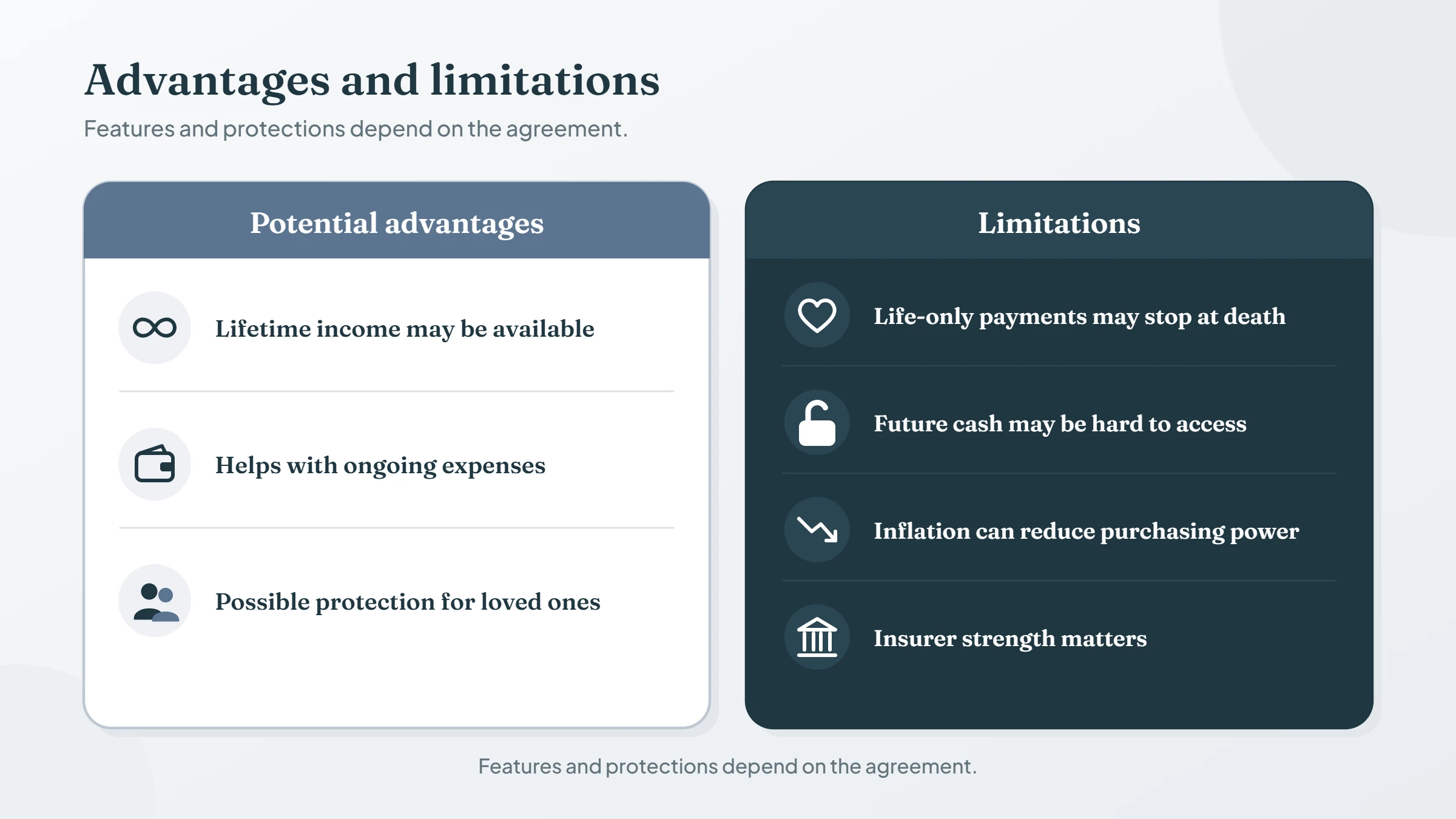
Life-contingent payments can provide valuable support, but they also come with restrictions. The right arrangement depends on a person’s needs and the settlement terms.
Potential Advantages
Income that can last a lifetime. A lifetime payment stream can continue even if the recipient lives longer than expected. The obligation remains subject to the agreement and the insurer’s ability to pay.
Help with ongoing expenses. Regular payments can support recurring costs such as housing, transportation, and medical care.
Less pressure to manage a large lump sum. Scheduled payments spread compensation over time, which can help protect money intended for future needs.
Possible protection for loved ones. A guaranteed period or survivor provision can provide continuing payments after the measuring life dies.
Potential Limitations
Payments may stop after death. A life-only payment generally does not continue to family members.
The total received may be uncertain. Nobody can know in advance how many lifetime payments a person will receive.
Future money may be difficult to access early. Structured settlement payment dates are generally set in the agreement. You usually cannot simply ask the insurer to release future payments as a lump sum.
Inflation can reduce purchasing power. A payment that feels comfortable today may cover fewer expenses years later. Some schedules include planned increases, but others remain fixed.
Insurer strength matters. A payment guarantee is a contractual promise, not a promise that every possible risk disappears. State guaranty association protections have limits and exclusions that vary.
Can You Sell Life-Contingent Structured Settlement Payments?
Yes, some life-contingent structured settlement payment rights can be sold. The possibility of a sale depends on the agreement, the buyer’s criteria, applicable law, and any required court approval.
A sale generally involves transferring the right to receive specified future payments in exchange for a lump sum. The payment schedule and proposed transfer need to be reviewed before a buyer can determine what it may be willing to purchase.
Some people consider selling because they need money for an expense that cannot comfortably wait. Others want to explore a partial sale while preserving some future income.
A partial sale may be possible, but it is not automatic. The available options depend on your payment terms, the buyer, and the applicable approval process. You should understand exactly which payments you would give up and which ones, if any, you would keep.
Considering your options? Talk to MySettlement about your structured settlement payments. Your documents can help determine what options may be available for your particular payment schedule.
How Are Life-Contingent Payments Valued?
A buyer considering future payments looks at more than the monthly amount. The timing, duration, and conditions attached to the payments all matter.
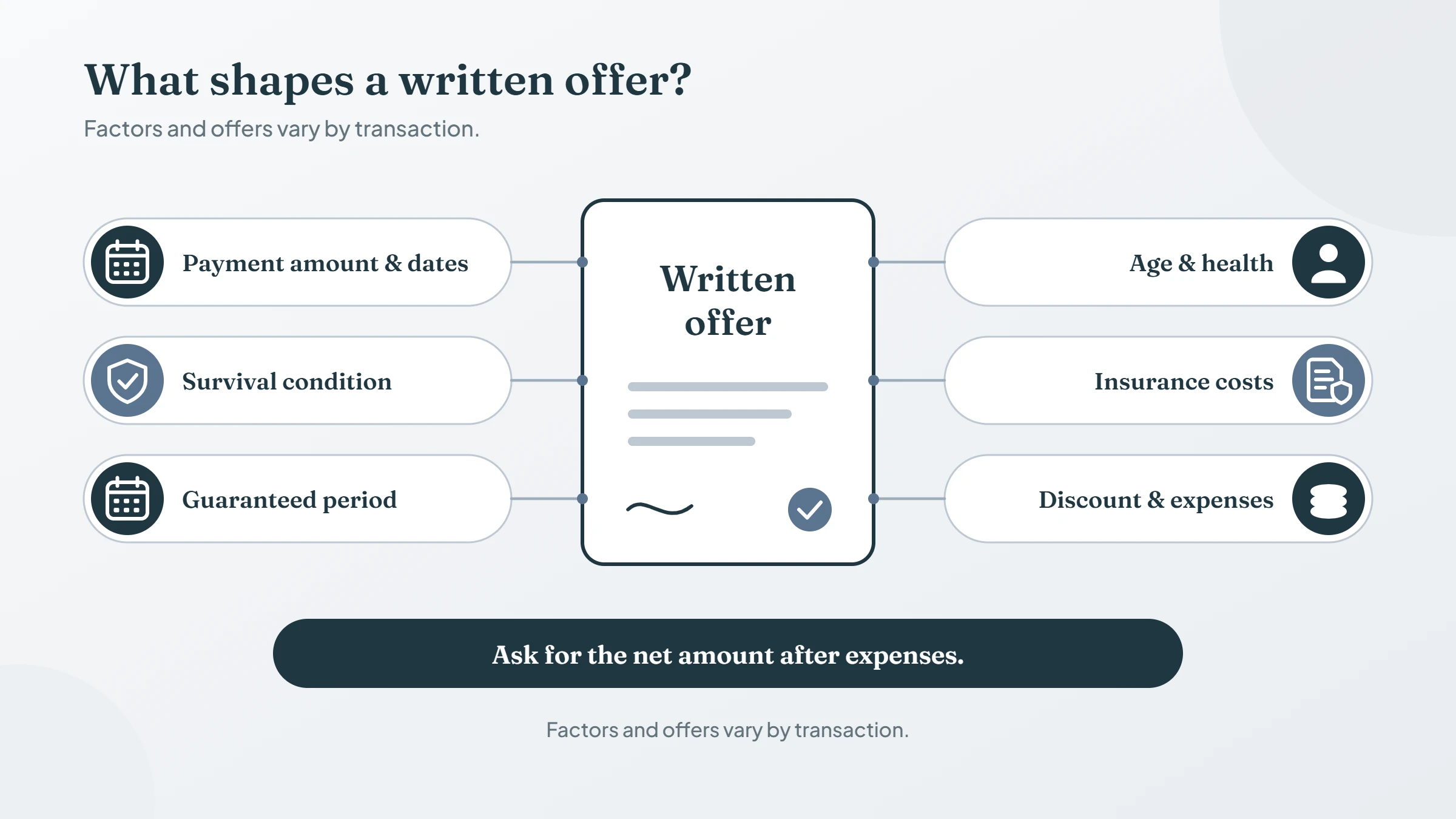
Common factors may include:
- Payment amount: How much is scheduled to be paid?
- Payment dates: When do the payments begin, and how often are they due?
- Survival condition: Whose life determines the payments?
- Guaranteed period: Are any of the payments guaranteed for a set time?
- Age and health information: What information is relevant to the buyer’s assessment?
- Insurance costs: Does the proposed transaction involve a separate insurance arrangement?
- Discount and expenses: What amount is offered today, and what costs are deducted?
A buyer must account for the possibility that life-contingent payments will stop before all the payments in an illustration become due. That makes the valuation different from one involving only guaranteed payments.
What Is a Rated Age?
A rated age is an age used in underwriting that may differ from a person’s actual age. An insurer may use it when pricing a life-contingent annuity if a medical condition affects its assessment of life expectancy.
A rated age is not a prediction of the date someone will die. It is an underwriting tool.
A buyer considering a later sale may use its own assessment. You should not assume that a buyer will use the original insurer’s rated age or reach the same conclusion.
The Society of Actuaries discusses rated ages and underwriting in its research on structured settlement annuities.
Your settlement has a number. Let's make it work for you.
Get a free, no obligation quote from a specialist who actually knows what your payments are worth.
How Much Will You Receive?
There is no reliable percentage that applies to every life-contingent settlement.
An offer depends on the particular payments and the proposed transaction. A figure based on assumed future payments is also not the same as a guaranteed total, because some payments may never become due.
Ask for a written breakdown of the offer, including any expenses and the net amount you would receive. Take time to compare that amount with the income you would be giving up.
Do You Need Life Insurance to Sell Life-Contingent Payments?
Not necessarily. Requirements vary between buyers and transactions.
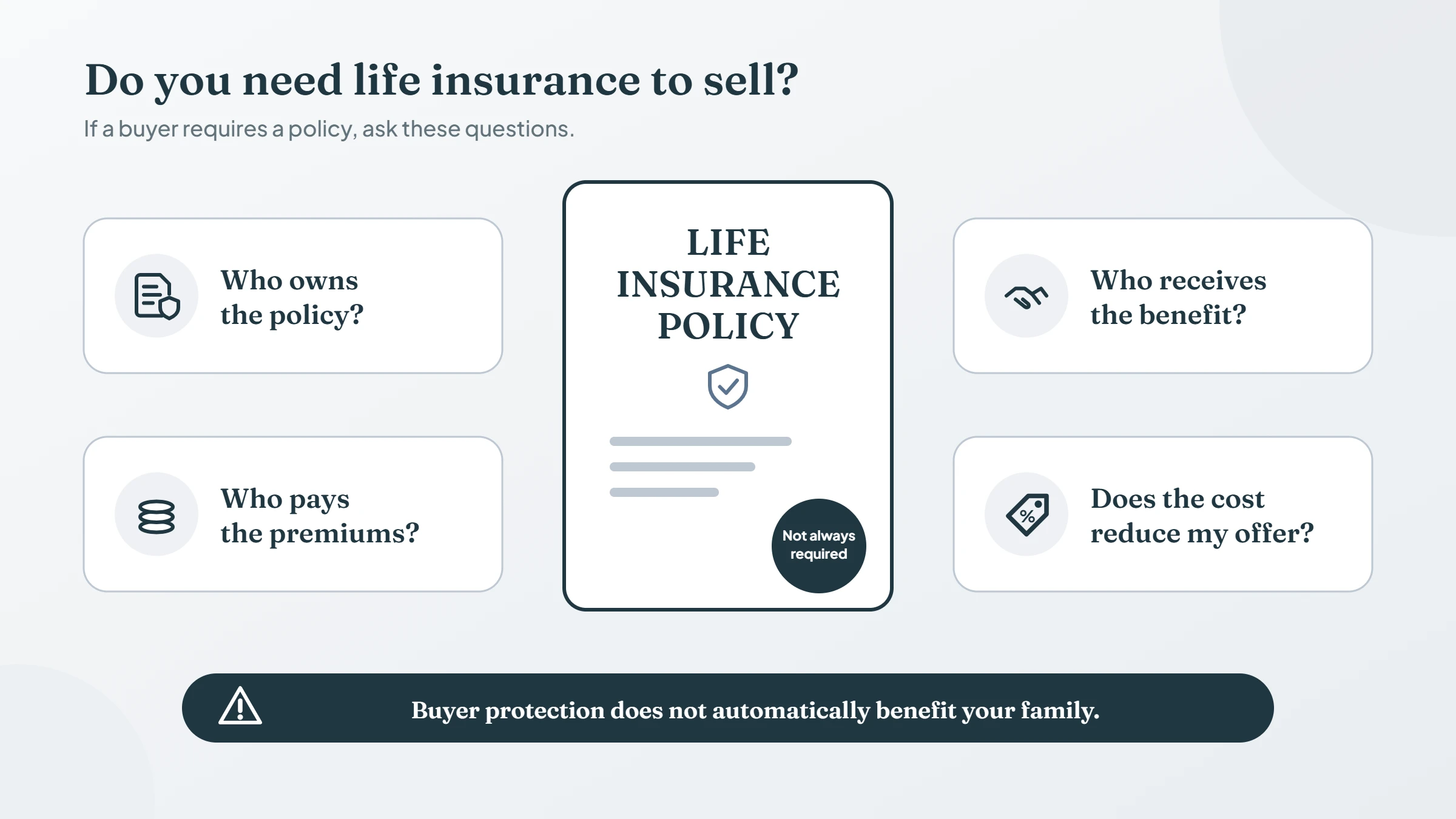
Some buyers may arrange or require a separate life insurance policy or another form of protection to manage the risk that the measuring life dies before the transferred payments are complete.
If insurance is part of a proposed sale, ask:
- Who owns the policy?
- Who receives the insurance benefit?
- Who pays the premiums?
- Does the cost reduce my offer?
- What medical information is needed?
- What happens to the policy after the transaction?
A policy intended to protect a buyer does not automatically provide a death benefit to your family. The policy’s ownership, beneficiary designation, and terms determine who receives any insurance proceeds.
Does Selling Require Court Approval?
A transfer of structured settlement payment rights generally requires approval under the applicable state process. The court reviews the proposed transaction and the information required by state law.
The review commonly considers the seller’s interests and the welfare and support of any dependents. Approval is not automatic.
Federal law also addresses structured settlement factoring transactions. Under Internal Revenue Code Section 5891, a qualifying order must satisfy specific requirements for an exception to the federal excise tax on the factoring discount. The tax provision applies to the person acquiring the payment rights; it is not a 40% charge automatically taken from every seller’s lump sum.
Some states also have rules specific to life-contingent transfers. For example, Washington law requires the transferee to establish and maintain procedures for periodically confirming the payee’s survival and notifying the relevant parties after death. Requirements vary by state.
Are Life-Contingent Structured Settlement Payments Taxable?
The fact that a payment is life-contingent does not, on its own, determine its tax treatment.
Under federal law, qualifying damages received because of a personal physical injury or physical sickness are generally excluded from gross income, subject to the applicable rules and exceptions. Other types of settlement proceeds may be taxable.
The IRS explains that the reason the settlement was paid and the facts surrounding it matter when determining tax treatment.
A proposed sale deserves its own tax review. Do not assume that every lump sum from a sale receives the same treatment in every situation. A qualified tax professional can review your original settlement and the proposed transfer.
A sale may also affect means-tested benefits, such as Supplemental Security Income, depending on your circumstances. If you rely on those programs, speak with a benefits professional before accepting an offer.
Questions to Ask Before Selling
A lump sum can solve an immediate problem, but the payments you transfer may have supported you for years. Before making a decision, make sure you understand the answers to these questions:
- Which payments am I transferring? Check the amounts, dates, and any conditions.
- Which payments will I keep? Remaining life-contingent payments may still depend on the measuring life being alive.
- What is my net lump sum? Ask for the amount after listed deductions and expenses.
- How was the offer calculated? Ask about the discount, assumptions, and any insurance costs.
- Will I need to provide medical information? Find out what is requested and how it will be used.
- Is a separate insurance policy involved? Understand who owns it, pays for it, and benefits from it.
- How might the sale affect my family or benefits? Consider future income, dependents, taxes, and public benefits.
- What approval and cancellation rules apply? These depend on your state and the transaction.
Independent legal, financial, tax, or benefits advice can help you evaluate the decision based on your circumstances.
Frequently Asked Questions
Do life-contingent payments always stop when the recipient dies?
No. Purely life-only payments generally stop when the measuring life dies. A guaranteed period, survivor provision, or separate death benefit can produce a different result.
Can a structured settlement have guaranteed and life-contingent payments?
Yes. A settlement can include a guaranteed period followed by lifetime payments. It can also contain separate guaranteed lump sums and life-contingent monthly payments.
Is a life-contingent settlement the same as a life settlement?
No. A life-contingent structured settlement payment depends on someone’s survival. A life settlement generally involves selling a life insurance policy. They are different transactions.
Can I sell only some of my life-contingent payments?
A partial sale may be possible, depending on the payment terms, buyer, state law, and required approval. Review the proposed schedule carefully so you know which payments would be transferred.
Can my beneficiary sell payments after I die?
A beneficiary may have rights to remaining guaranteed payments under the settlement documents. A potential sale depends on those rights, the agreement, a buyer’s criteria, and applicable law. Purely life-only payments generally stop when the measuring life dies.
Is a life-contingent settlement better than a guaranteed settlement?
Neither is automatically better. Lifetime payments can provide income for as long as the covered person lives. Guaranteed payments can provide greater certainty about the scheduled payment period. Some arrangements combine both features.
Understand Your Payments Before Making a Decision
A life-contingent structured settlement can provide income that lasts for years—or even a lifetime. The most important details are in your agreement: whose life controls the payments, which amounts are guaranteed, and what happens after death.
If you are considering a lump sum, take time to understand the payments you would transfer and the income you would retain. MySettlement can discuss your structured settlement documents and help you explore available options.