
- Structured Settlements
- What are Structured Settlements
- Best Structured Settlement Buyers
- How Selling Works
- Eligible Cases
- Eligibility Criteria
- Structured Settlement Regulations
- J&J Settlement
- Maui Wildfire Settlement
- Types of Structured Settlements
- Guaranteed Structured Settlements
- Increasing Structured Settlements
- Deferred Structured Settlements
- Life-Contingent Structured Settlements
- Future Lump Sum Settlements
- Annuities
- What Is An Annuity
- Guide to Selling an Annuity
- Income Annuities
- How Are Annuities Taxed?
- 7 Common Annuity Mistakes & How to Avoid Them
- Annuity Beneficiaries
- Types of Annuities
- Fixed Annuities
- Fixed Index Annuities
- Variable Annuities
- Immediate Annuities
- Deferred Annuities
- Registered Index-Linked Annuity
- Pre-Settlement Funding
- What is Pre-Settlement Funding
- How Pre-Settlement Funding Works
- Eligible Cases for Pre-Settlement Funding
- Pre-Settlement Funding Criteria
- Pre-Settlement Funding Regulations
- Types of Pre-Settlement Funding
- Non-Recourse Cash Advances
- Structured Pre-Settlement Funding
- One-Time Lump Sum Cash Advances
- Compounding Interest Funding
- Flat-Fee Structured Funding
- Structured Settlement Calculator



One specialist stays with you from your first call through funding.
November, 2026
Your rent, groceries and utility bills keep coming while your injury claim is pending. Scheduled pre-settlement advances can help cover those recurring expenses through a series of payments.
The funding agreement determines how much you receive, when each payment arrives and what it costs. Those details matter just as much as the amount offered.
What Is Structured Pre-Settlement Funding?
Structured pre-settlement funding describes funding arranged as scheduled installments during a pending legal claim. You may also see this arrangement described as monthly pre-settlement funding or scheduled advances.
An agreement might provide a monthly amount, an initial payment followed by smaller advances, or another approved schedule. Availability depends on the funder, your case and applicable law.
“Structured” describes the payment schedule. Non-recourse describes repayment protection, while flat fees and compounding charges describe pricing. These features can exist in the same agreement.
Selling payment rights from an existing structured settlement is a separate transaction.
How Do Scheduled Advances Work?
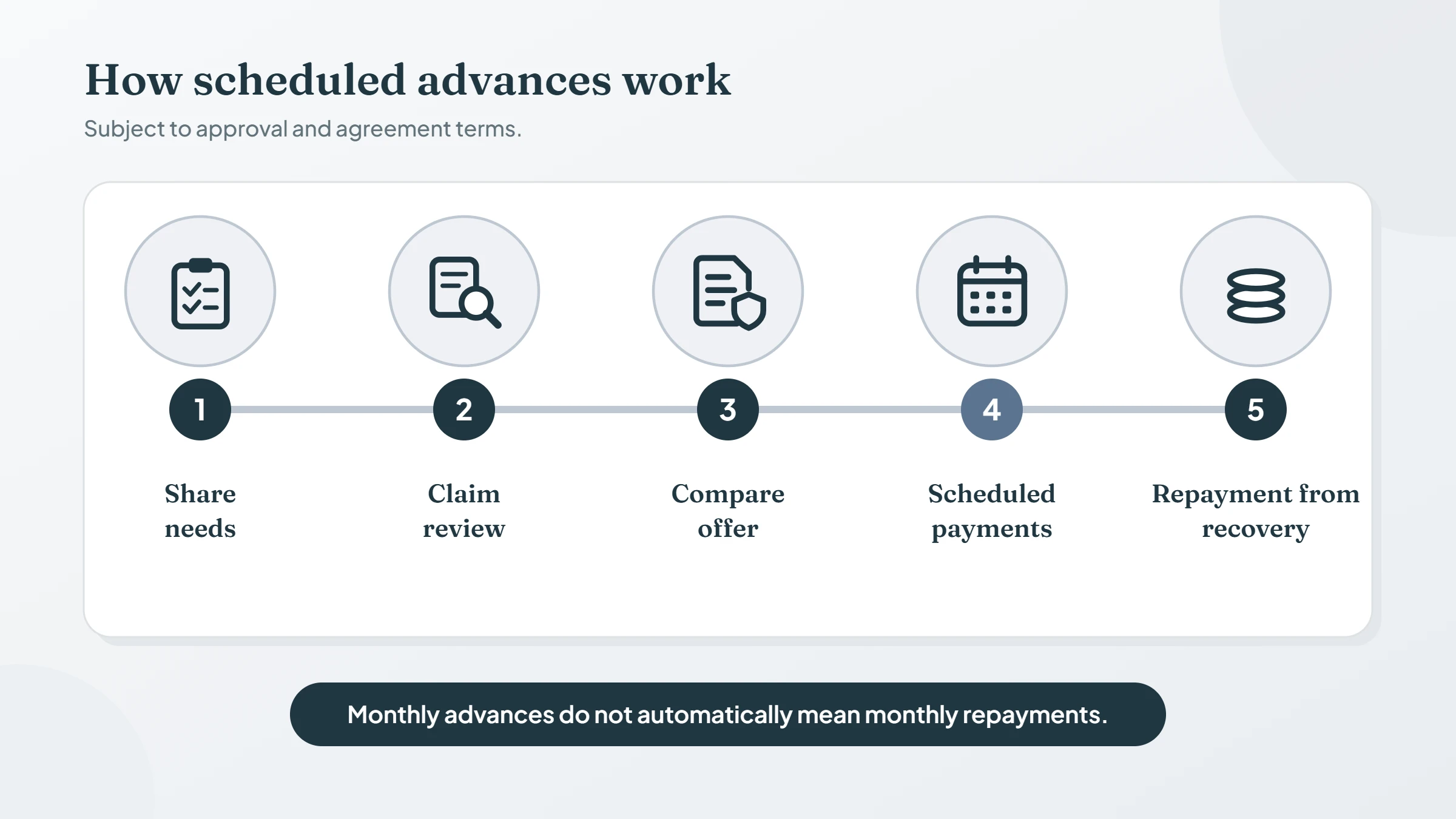
The process starts with your case and the expenses you need to cover.
- Share your funding needs. Provide your attorney’s contact details and explain the monthly expenses or immediate bills you need help paying.
- The funder reviews your claim. The review can include liability, damages, available insurance, expected recovery and existing funding obligations.
- Review the written offer. Check payment dates, amounts, charges and conditions for future advances. Your attorney can help you understand the agreement.
- Receive approved payments. Disbursements follow the agreement. A schedule agreed at signing differs from requesting another advance that needs a later approval.
- Repayment follows the agreement. Under non-recourse terms, the funder generally receives the agreed payoff from available case proceeds after a successful recovery. Your attorney usually coordinates this payment.
Monthly Advances vs. a One-Time Lump Sum
The right arrangement depends on when you need the money and the terms available.
| What to compare | One-time lump sum | Scheduled advances |
|---|---|---|
| Payment timing | An agreed advance paid once | Payments released over an agreed schedule |
| Expenses it may address | A large bill or several immediate costs | Recurring expenses during the case |
| Access to more money | Another advance may need a separate approval | Future payments depend on the agreement’s commitments and conditions |
| Cost calculation | Charges apply under the lump-sum agreement | Check when charges begin on each disbursement |
| Main trade-off | More cash available upfront | Smaller amounts available at each payment date |
A scheduled arrangement may also combine an upfront payment for urgent bills with later advances. Ask if that option is available for your claim.
How Much Does Structured Pre-Settlement Funding Cost?
Payment frequency alone does not tell you the price. The total payoff depends on:
- How much money is actually disbursed.
- When charges start on each payment.
- The pricing method and time until repayment.
- Separate fees, minimum charges and any payoff cap.
Scheduled funding may cost less when each payment starts accruing charges only after it is disbursed. That benefit depends on the agreement.
A Cost Example Using the Same Total Advance
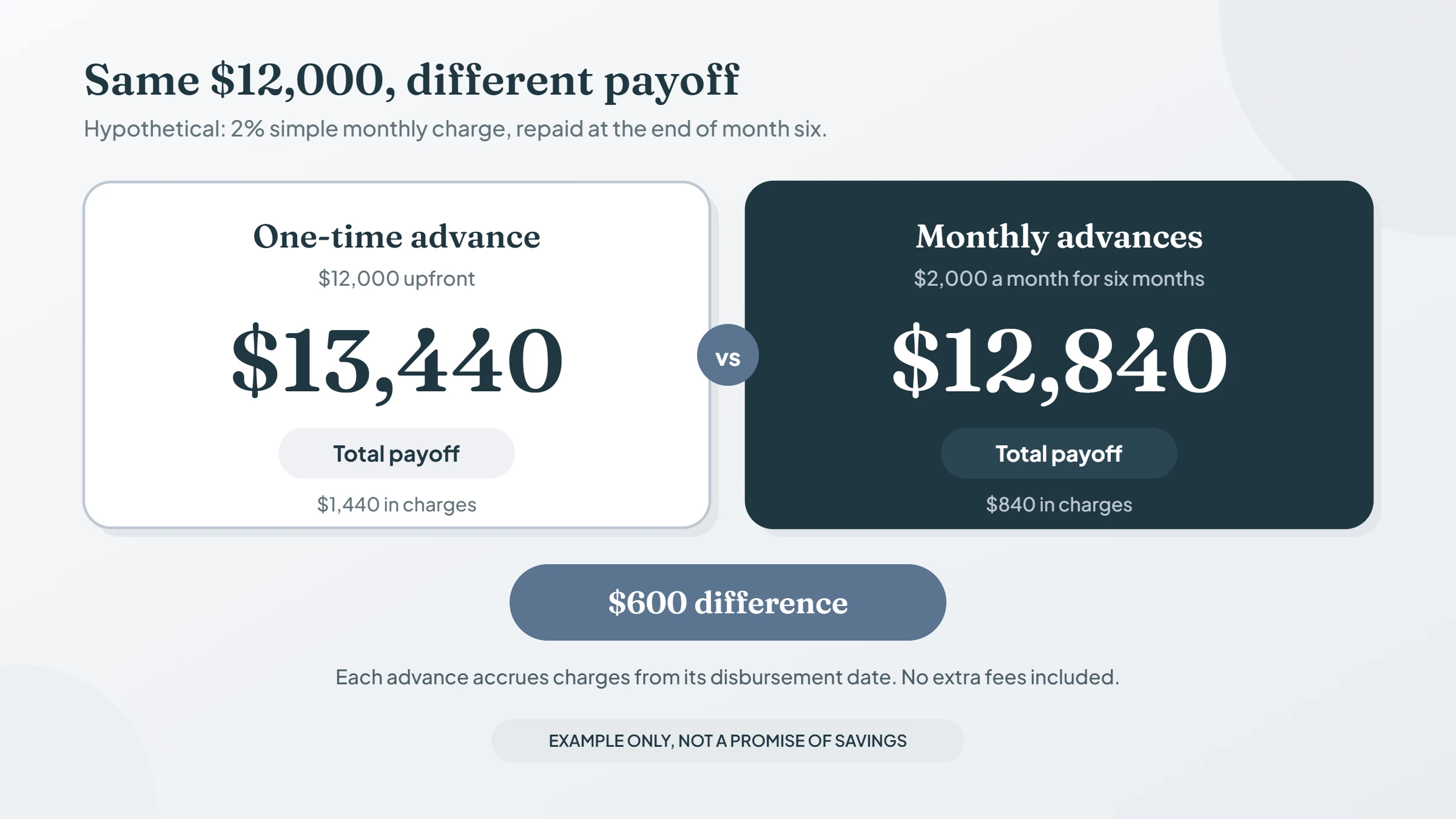
Assume both arrangements provide $12,000, carry a 2% simple monthly charge, and are repaid at the end of month six. The calculation excludes additional fees and assumes charges apply separately to each disbursement.
| Arrangement | Total received | Funding charges | Total payoff |
|---|---|---|---|
| $12,000 at the beginning of month one | $12,000 | $1,440 | $13,440 |
| $2,000 at the beginning of each month for six months | $12,000 | $840 | $12,840 |
The monthly payments accrue charges for six, five, four, three, two and one months, respectively. The difference is $600 under these assumptions.
These figures illustrate payment timing. They are not a MySettlement quote or a promise of savings.
Ask for the Combined Payoff
Request a written breakdown showing what all advances would cost if your case pays at different dates. Separate agreements can make the combined obligation harder to track.
Ohio Revised Code § 1357.03, for example, requires covered agreements to disclose charges and specified maximum obligations, including cumulative amounts when the consumer enters multiple agreements with the same company. Requirements vary by state.
When Might Monthly Funding Make Sense?
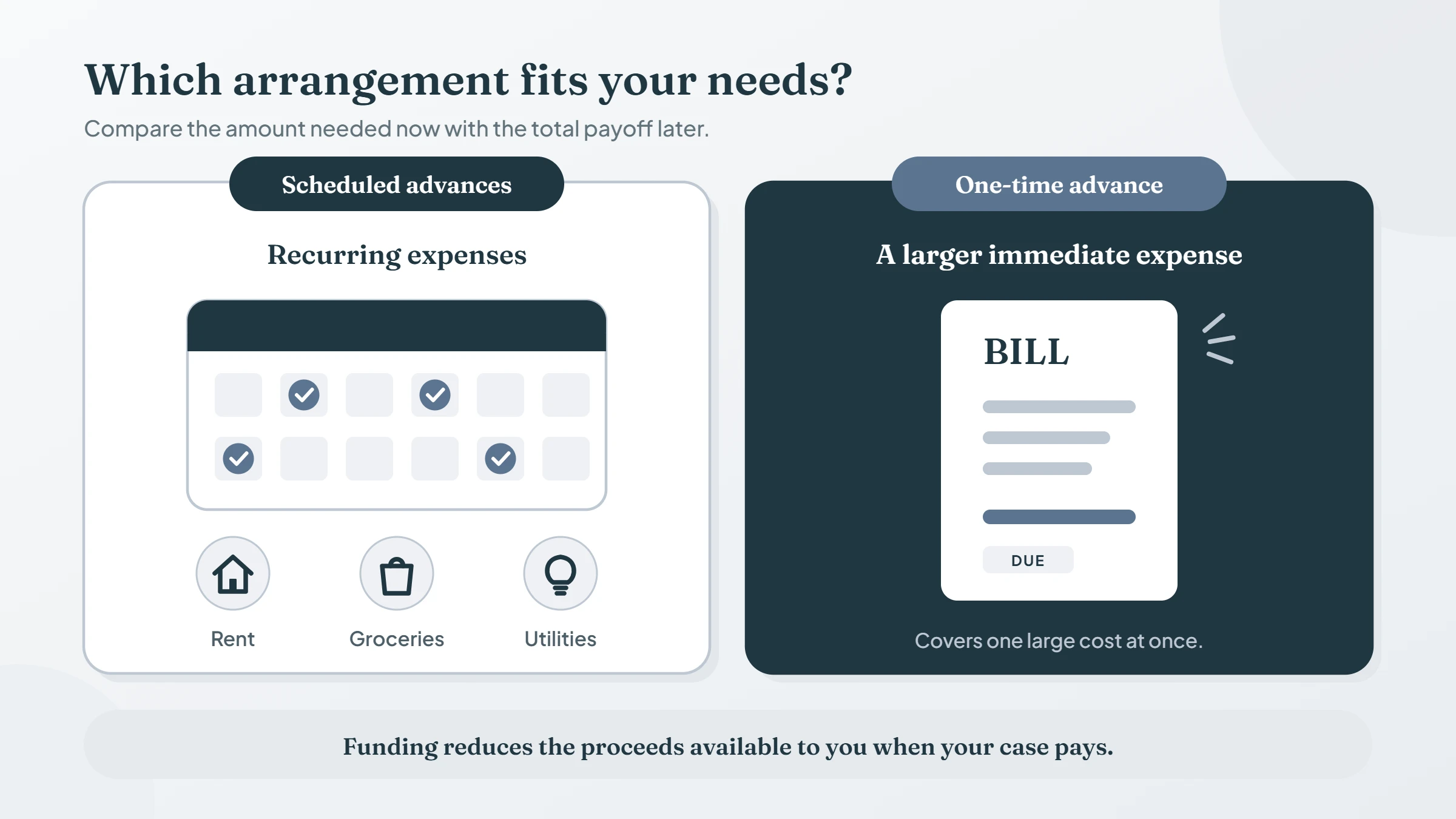
Scheduled advances may suit someone facing ongoing expenses during a lengthy claim. They can help match incoming cash to rent, utilities, groceries or other recurring needs.
An immediate lump sum may be more practical when one large expense needs attention now. A monthly schedule also does not guarantee that your claim will settle by the time the scheduled funding ends.
Funding reduces the proceeds available to you when your case pays. Compare the amount you need today with the total amount that could be deducted later.
What Should You Check Before Accepting an Offer?
Ask your attorney and the funding company:
- Are future payments committed? Identify any further reviews or conditions.
- Can I decline unused payments? Check the procedure and any related charges.
- Can the payment amount change? Ask whose agreement is needed.
- What happens if my case settles early? Check how remaining installments and the final payoff are handled.
- What if my case takes longer? Confirm when the schedule ends and how long charges can continue.
- How does existing funding affect this offer? Disclose earlier agreements before accepting another.
A lower advertised rate can still produce a higher payoff if the fees or calculation method differ. Compare offers using matching amounts, payment dates and repayment dates.
Compare Funding Offers Through MySettlement
MySettlement connects you with multiple pre-settlement funding offers, giving you options to compare before choosing.
Tell us how much you need now and what ongoing expenses you expect. You can then compare available offers for their payment arrangements, charges and repayment terms. Scheduled advances depend on the participating funder’s approval and agreement.
Frequently Asked Questions
Is monthly funding the same as getting another advance later?
A scheduled arrangement sets out future disbursements in the agreement. An additional advance requested later may require another review and approval. Check which arrangement your offer provides.
What happens if I lose my case?
Under non-recourse terms, an ordinary case loss producing no recovery generally means no repayment. Review exceptions involving fraud, misrepresentation or material breach, along with the treatment of an insufficient recovery.
Will I receive every scheduled payment if my case settles early?
A schedule may end when the case resolves. The agreement determines what happens to future installments and how the payoff is calculated on money already received.